Allulose-Sweetened Snickerdoodles
Soft almond-flour snickerdoodles rolled in cinnamon and allulose. About 16 g of carbohydrate in two cookies, 11 g of it from allulose.
One serving
One serving is 2 cookies (makes 16). Prep 20 min · Cook 14 min · Rest or chill 30 min.

Steps
Beat the butter and allulose in a large bowl until creamy, about 2 minutes. Beat in the egg and vanilla extract.
Whisk the almond flour, cream of tartar, baking soda and salt, then mix them into the butter until a soft dough forms.
Cover and refrigerate for 30 minutes so the dough is easy to roll.
Heat the oven to 325°F (165°C) and let it preheat for 15 minutes. Line a light-colored sheet pan with parchment.
Mix the allulose for the coating and the cinnamon in a small bowl.
Roll the dough into 16 balls of about 22 g each (about 1⅓ inches, 3.4 cm) and roll each one in the cinnamon mixture until fully coated.

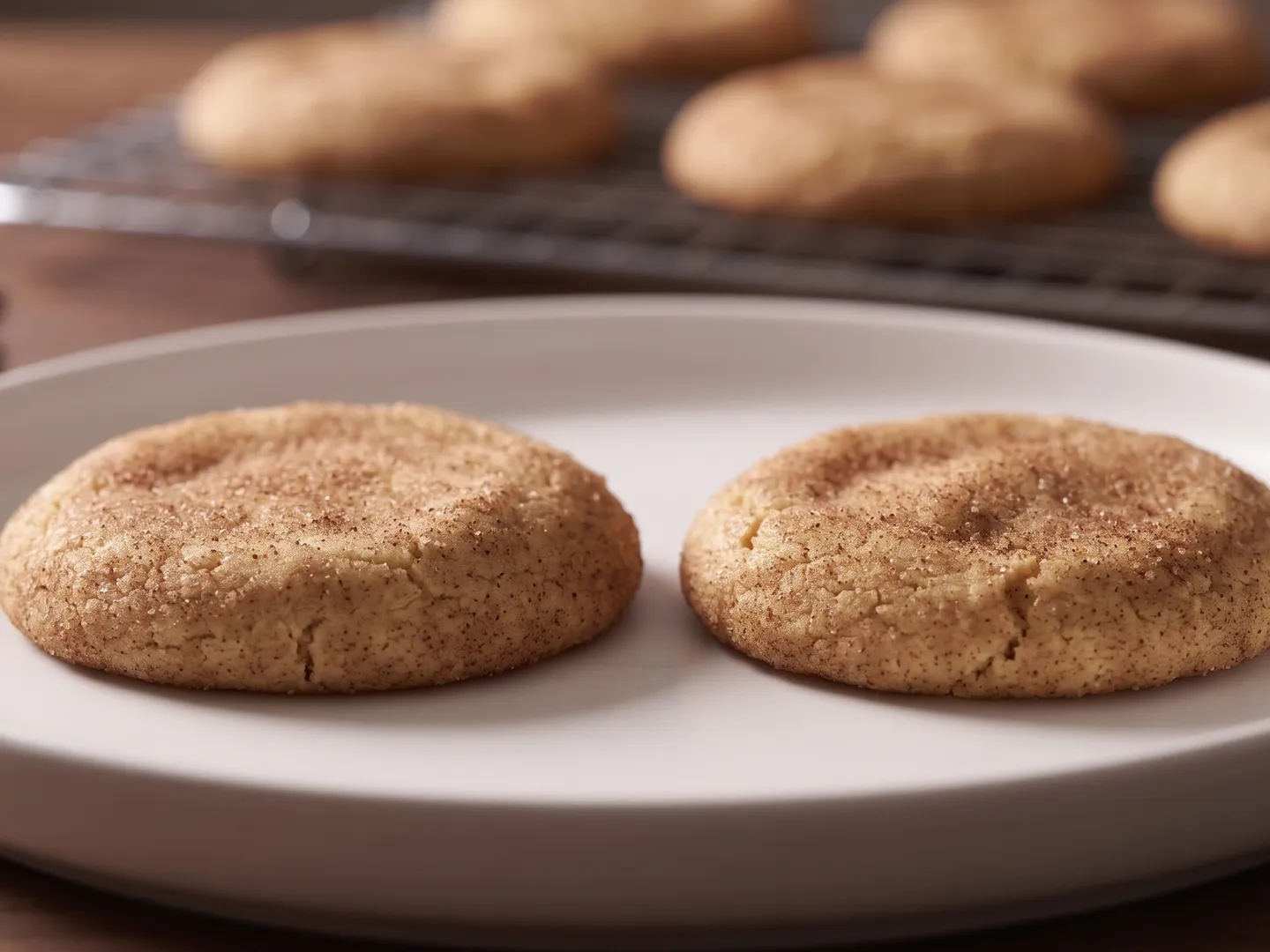
AI-generated illustrative image. Place the balls 2 inches (5 cm) apart on the pan and flatten each to ½ inch (1.3 cm) with your palm; almond-flour dough spreads very little. Small cracks at the edges are normal.
Bake until the edges are set and lightly golden and the centers still look soft, about 14 minutes; check at 12 minutes. Cool on the pan for 10 minutes; they firm up as they cool. Then move them to a wire rack.
On the plate
A dessert, not part of the plate. Two cookies add about 16 g of carbohydrate to the meal.
Nutrition
| Nutrient | Per serving (1/8 of recipe) |
|---|---|
| Calories (kcal) | 192 |
| Total carbohydrate | 16 g |
| Dietary fiber | 3 g |
| Total sugars | 1 g |
| Protein | 6 g |
| Total fat | 17 g |
| Saturated fat | 4 g |
| Sodium | 95 mg |
Total carbohydrate includes fiber, as on US nutrition labels. Values are calculated from USDA FoodData Central for the ingredients as listed and are estimates. How we calculate.
Where these numbers come from
| Ingredient | Weight | Carbs | Source |
|---|---|---|---|
| almond flour Almond flour (blanched almonds) | 190 g | 35.9 g | “Nuts, almonds, blanched”, USDA SR Legacy, FDC ID 170568 |
| cream of tartar Cream of tartar | 3 g | 1.8 g | “Leavening agents, cream of tartar”, USDA SR Legacy, FDC ID 175041 |
| baking soda Baking soda | 2 g | 0.0 g | “Leavening agents, baking soda”, USDA SR Legacy, FDC ID 175040 |
| salt Salt | <1 g | 0.0 g | “Salt, table”, USDA SR Legacy, FDC ID 173468 |
| butter Butter, unsalted | 42 g | <1 g | “Butter, without salt”, USDA SR Legacy, FDC ID 173430 |
| allulose Allulose, granulated | 64 g | 64.0 g | “ALLULOSE SUGAR”, USDA Branded, FDC ID 2652700 |
| egg Egg, whole, raw | 50 g | <1 g | “Egg, whole, raw, fresh”, USDA SR Legacy, FDC ID 171287 |
| vanilla extract Vanilla extract | 4 g | <1 g | “Vanilla extract”, USDA SR Legacy, FDC ID 173471 |
| allulose for the coating Allulose, granulated | 24 g | 24.0 g | “ALLULOSE SUGAR”, USDA Branded, FDC ID 2652700 |
| cinnamon Cinnamon, ground | 4 g | 3.2 g | “Spices, cinnamon, ground”, USDA SR Legacy, FDC ID 171320 |
Counted as zero because the source has no value and the amount is 1 g or less per serving: cream of tartar (); baking soda (); salt (); vanilla extract (); cinnamon ().
Calculation engine v1.3.0.
Swaps and variations
- Softer centers
- Take them out 2 minutes early; they firm up as they cool.
- No cream of tartar
- Use ½ tsp baking powder instead of the cream of tartar and baking soda; the tang will be milder.
Storage
Airtight at room temperature up to 3 days, or frozen up to 3 months.
How we checked this recipe
We haven't cooked this recipe in our kitchen yet. Before publishing it, we compared it with tested recipes of the same kind and checked how its ingredients behave and its safe temperatures.
- The recipe makes 16 cookies from balls of about 22 g. If you make them bigger and get fewer, each has more carbohydrate than listed.
- The nutrition counts all of the cinnamon coating; some stays in the bowl, so the real figure is a little lower.
- Allulose browns faster than sugar, so the oven is at 325°F: take them out when the edges are just golden; the centers set as they cool.
- Expect a soft, slightly cakey cookie rather than a deeply crackled top.
Tested recipes we compared
- Keto Snickerdoodles · Wholesome Yum. Almond-flour snickerdoodles with an allulose blend; readers report the edges burning at 350°F
- Snickerdoodle Cookies · King Arthur Baking. Cream of tartar and baking soda leavening; flattened to ½ inch, baked until set
- Keto Sugar Cookie Recipe · Lang's Chocolates. Almond flour and allulose baked at 325°F; soft centers firm as they cool
How the ingredients behave
- Baking tips for allulose sweeteners · Splenda. Allulose browns faster than sugar; bake about 25°F lower
- Troubleshooting cookies · America's Test Kitchen. Light-colored pans with parchment keep the bottoms from overbrowning
Food safety
- Raw flour and dough · CDC. Don't taste the raw dough: it has raw egg
Nutrition values are estimates calculated from USDA data for the ingredients as listed. This recipe is information, not medical advice; decisions about your diet belong to you and your healthcare team. How we calculate.
Printed from diabetesbites.com/recipes/allulose-sweetened-snickerdoodles. Nutrition per serving is calculated from USDA FoodData Central for the ingredients as listed.
FAQs
Quick answers about allulose-sweetened snickerdoodles.
Can you make snickerdoodles with allulose?
Yes. Allulose works both in the dough and in the cinnamon coating.
Why do snickerdoodles need cream of tartar?
It gives the classic slight tang and reacts with the baking soda to give a little lift.
How many carbohydrates are in two snickerdoodles?
About 16 g, 11 g of it from allulose.
Why use allulose?
It dissolves, browns and tastes much like sugar. US nutrition labels leave it out of total and added sugars but count it in total carbohydrate, and so do we.
How was this recipe?
Be the first to rate it.