Salmon Bowl
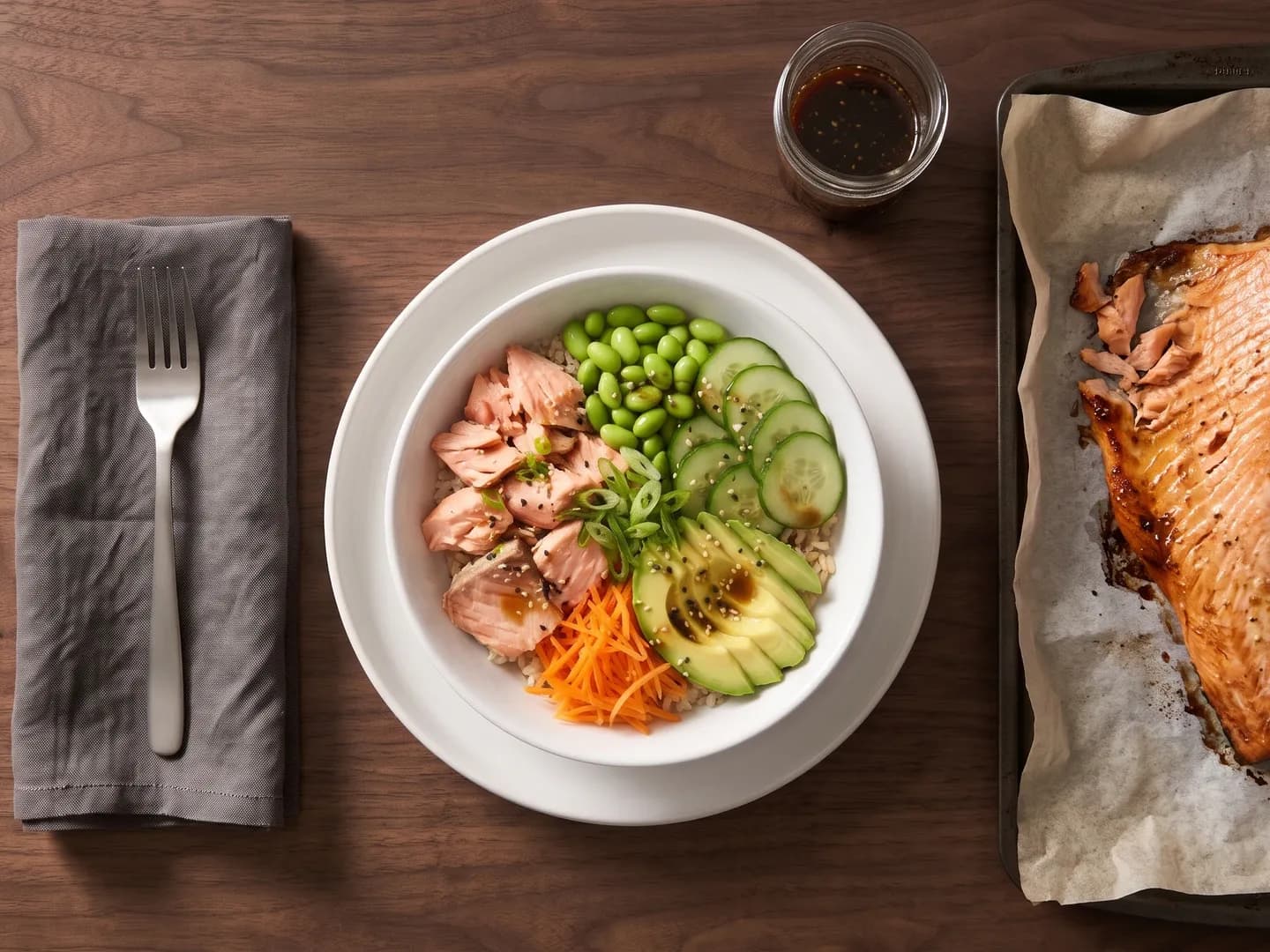
A salmon rice bowl with baked salmon, a measured ⅓ cup of brown rice, edamame, cucumber, avocado and carrot, dressed with low-sodium soy, ginger and sesame. About 33 g of carbohydrate per bowl.
One serving
One serving is 1 bowl. Prep 15 min · Cook 13 min.
Steps
Heat the oven to 400°F (200°C) and let it preheat for 15 minutes. Line a dark sheet pan with parchment.
Bake the salmon fillet until it flakes and a thermometer reads 145°F (63°C), about 13 minutes.
Whisk the soy sauce, vinegar, sesame oil, ginger and sriracha for the dressing.
Break the salmon into large flakes.
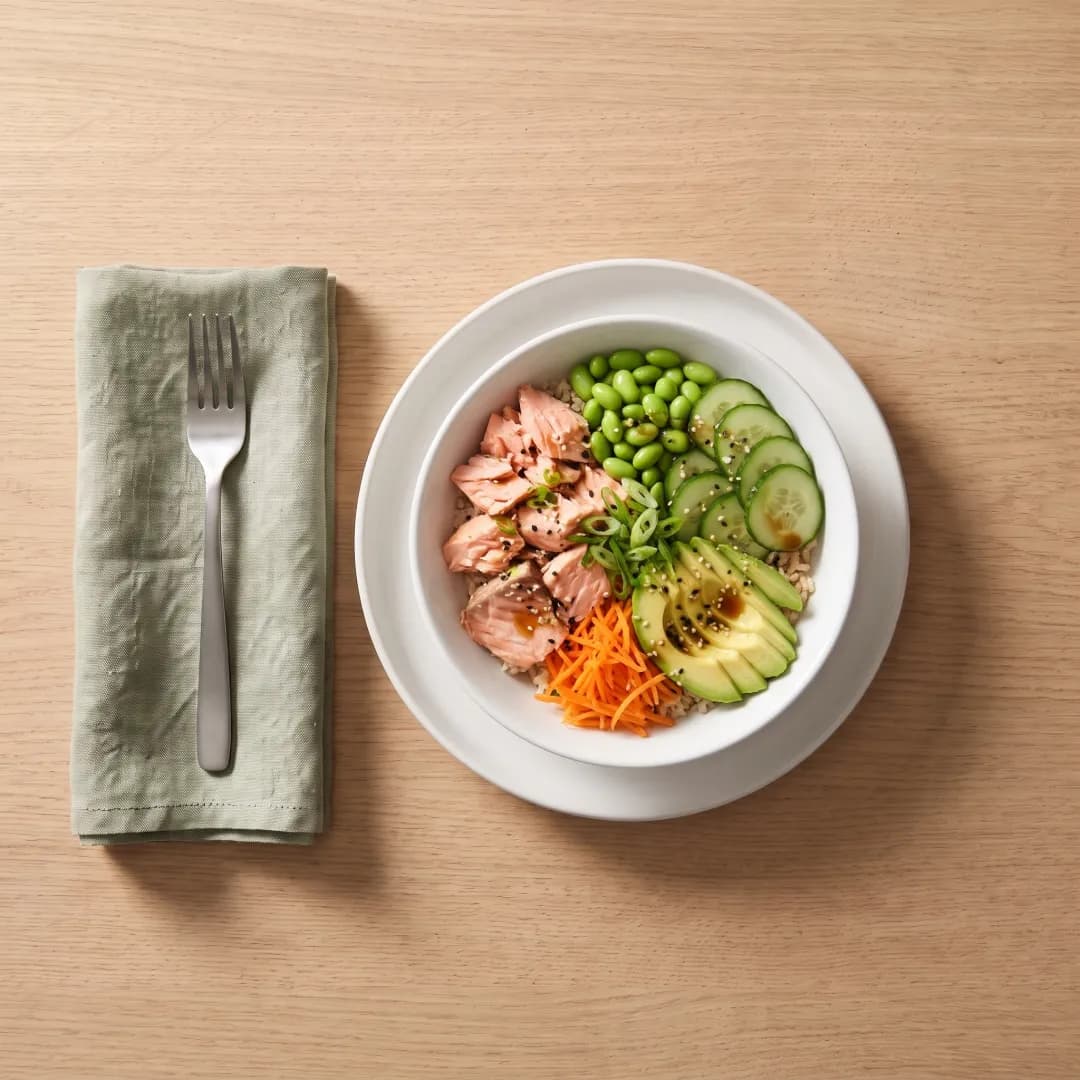
Put ⅓ cup brown rice in each bowl and arrange the salmon, edamame, cucumber, avocado and carrot in sections on top.
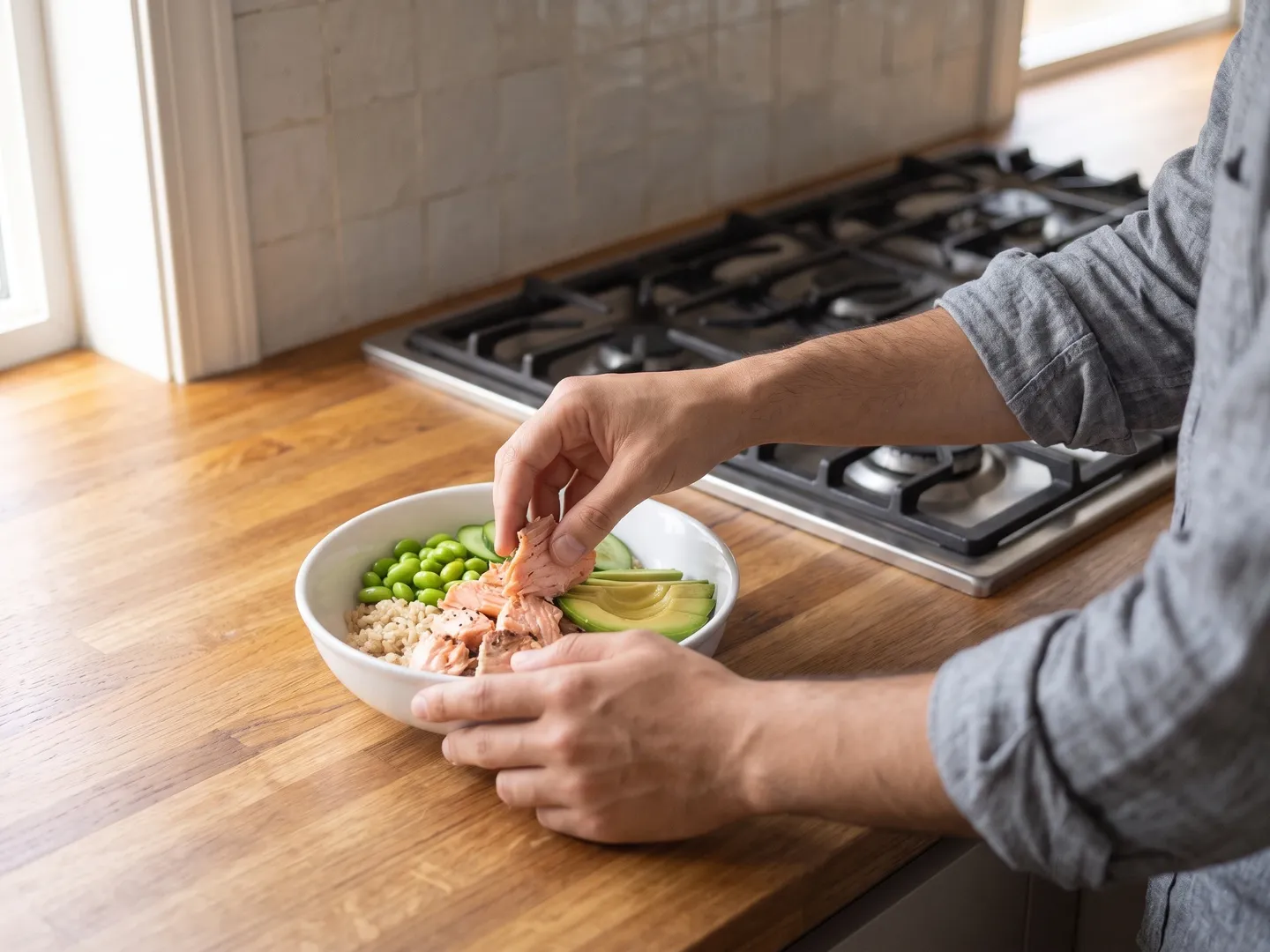
AI-generated illustrative image. Drizzle with the dressing and sprinkle with scallions and sesame seeds.
On the plate
A complete meal in a bowl, with protein, vegetables and a measured amount of carbohydrate: about 33 g per serving.
Nutrition
| Nutrient | Per serving (1/4 of recipe) |
|---|---|
| Calories (kcal) | 495 |
| Total carbohydrate | 33 g |
| Dietary fiber | 7 g |
| Total sugars | 3 g |
| Protein | 32 g |
| Total fat | 27 g |
| Saturated fat | 5 g |
| Sodium | 385 mg |
Total carbohydrate includes fiber, as on US nutrition labels. Values are calculated from USDA FoodData Central for the ingredients as listed and are estimates. How we calculate.
Where these numbers come from
| Ingredient | Weight | Carbs | Source |
|---|---|---|---|
| salmon fillet Salmon, Atlantic, farmed, raw | 450 g | 0.0 g | “Fish, salmon, Atlantic, farmed, raw”, USDA SR Legacy, FDC ID 175167 |
| brown rice Rice, brown, cooked | 320 g | 81.9 g | “Rice, brown, long-grain, cooked (Includes foods for USDA's Food Distribution Program)”, USDA SR Legacy, FDC ID 169704 |
| edamame Edamame, cooked | 150 g | 13.4 g | “Edamame, frozen, prepared”, USDA SR Legacy, FDC ID 168411 |
| cucumber Cucumber, with peel | 200 g | 7.3 g | “Cucumber, with peel, raw”, USDA SR Legacy, FDC ID 168409 |
| avocado Avocado, Hass | 150 g | 13.0 g | “Avocados, raw, California”, USDA SR Legacy, FDC ID 171706 |
| carrot Carrots, raw | 100 g | 9.6 g | “Carrots, raw”, USDA SR Legacy, FDC ID 170393 |
| scallions Scallions (green onions), raw | 20 g | 1.5 g | “Onions, spring or scallions (includes tops and bulb), raw”, USDA SR Legacy, FDC ID 170005 |
| sesame seeds Sesame seeds | 6 g | 1.4 g | “Seeds, sesame seeds, whole, dried”, USDA SR Legacy, FDC ID 170150 |
| soy sauce Soy sauce, low sodium | 30 g | 1.7 g | “Soy sauce made from soy and wheat (shoyu), low sodium”, USDA SR Legacy, FDC ID 172473 |
| vinegar Cider vinegar | 15 g | <1 g | “Vinegar, cider”, USDA SR Legacy, FDC ID 173469 |
| sesame oil Sesame oil | 9 g | 0.0 g | “Oil, sesame, salad or cooking”, USDA SR Legacy, FDC ID 171016 |
| ginger Ginger root, raw | 4 g | <1 g | “Ginger root, raw”, USDA SR Legacy, FDC ID 169231 |
| sriracha Sriracha | 4 g | <1 g | “Sauce, hot chile, sriracha”, USDA SR Legacy, FDC ID 171186 |
Counted as zero because the source has no value and the amount is 1 g or less per serving: ginger (); sriracha (saturated fat).
Calculation engine v1.3.0.
Swaps and variations
- Lower carb
- Use 1 cup of Parmesan Garlic Cauliflower Rice per bowl instead of the brown rice.
Storage
Refrigerate the salmon within 2 hours and store it, the rice, the vegetables and the dressing separately up to 3 days; slice the avocado when serving.
Nutrition values are estimates calculated from USDA data for the ingredients as listed. This recipe is information, not medical advice; decisions about your diet belong to you and your healthcare team. How we calculate.
Printed from diabetesbites.com/recipes/salmon-bowl. Nutrition per serving is calculated from USDA FoodData Central for the ingredients as listed.
FAQs
Quick answers about salmon bowl.
What sauce goes on a salmon bowl?
A simple mix of low-sodium soy sauce, vinegar, sesame oil, ginger and a little sriracha.
How many carbohydrates are in a salmon bowl?
About 33 g per bowl with ⅓ cup of brown rice, with 7 g of fiber and 32 g of protein.
How was this recipe?
Be the first to rate it.