Lighter Mac & Cheese
Stovetop mac and cheese made with chickpea pasta and cauliflower in a sharp cheddar sauce thickened with milk. About 14 g of carbohydrate and 9 g of protein per ¾ cup.
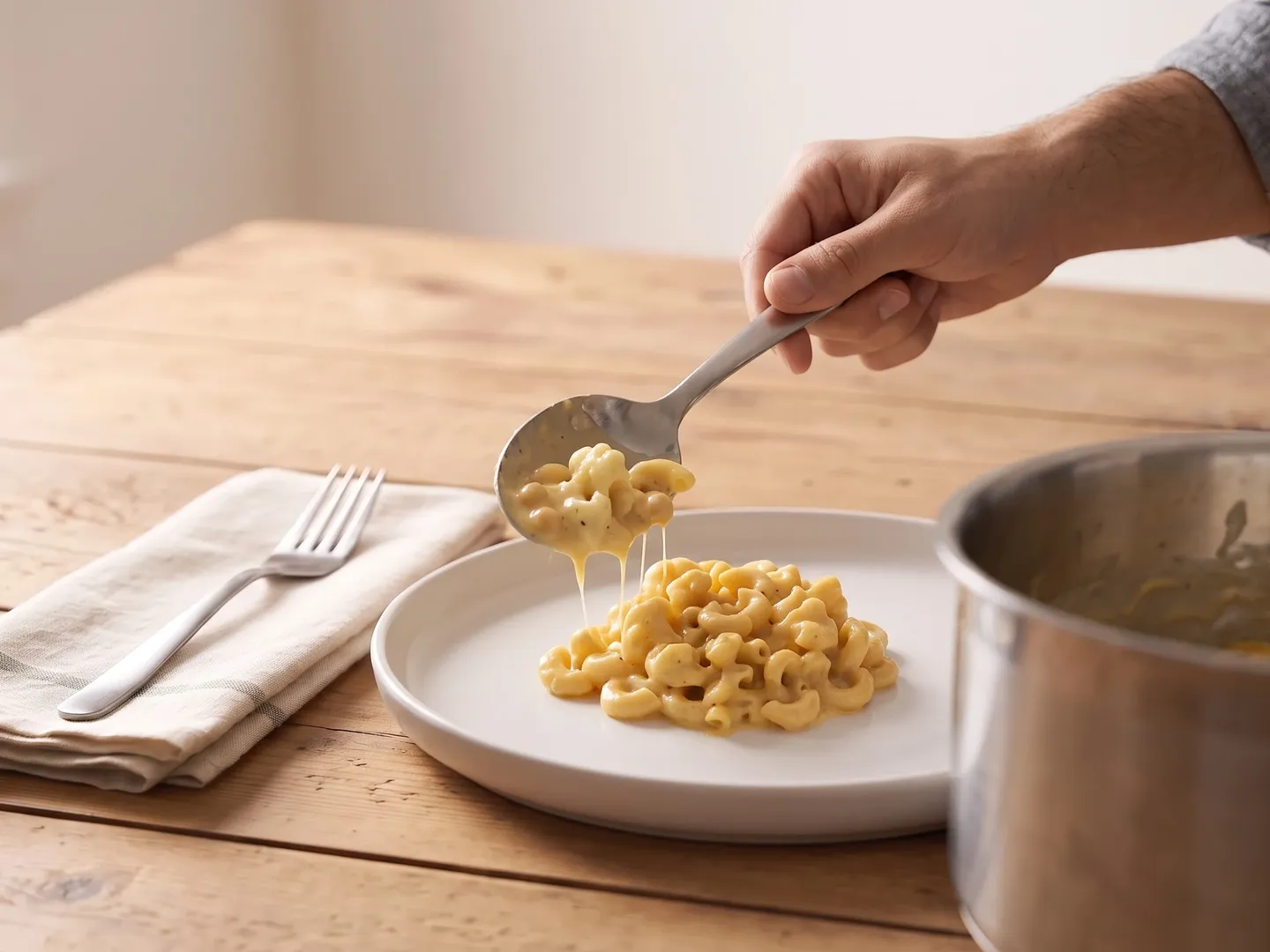
One serving
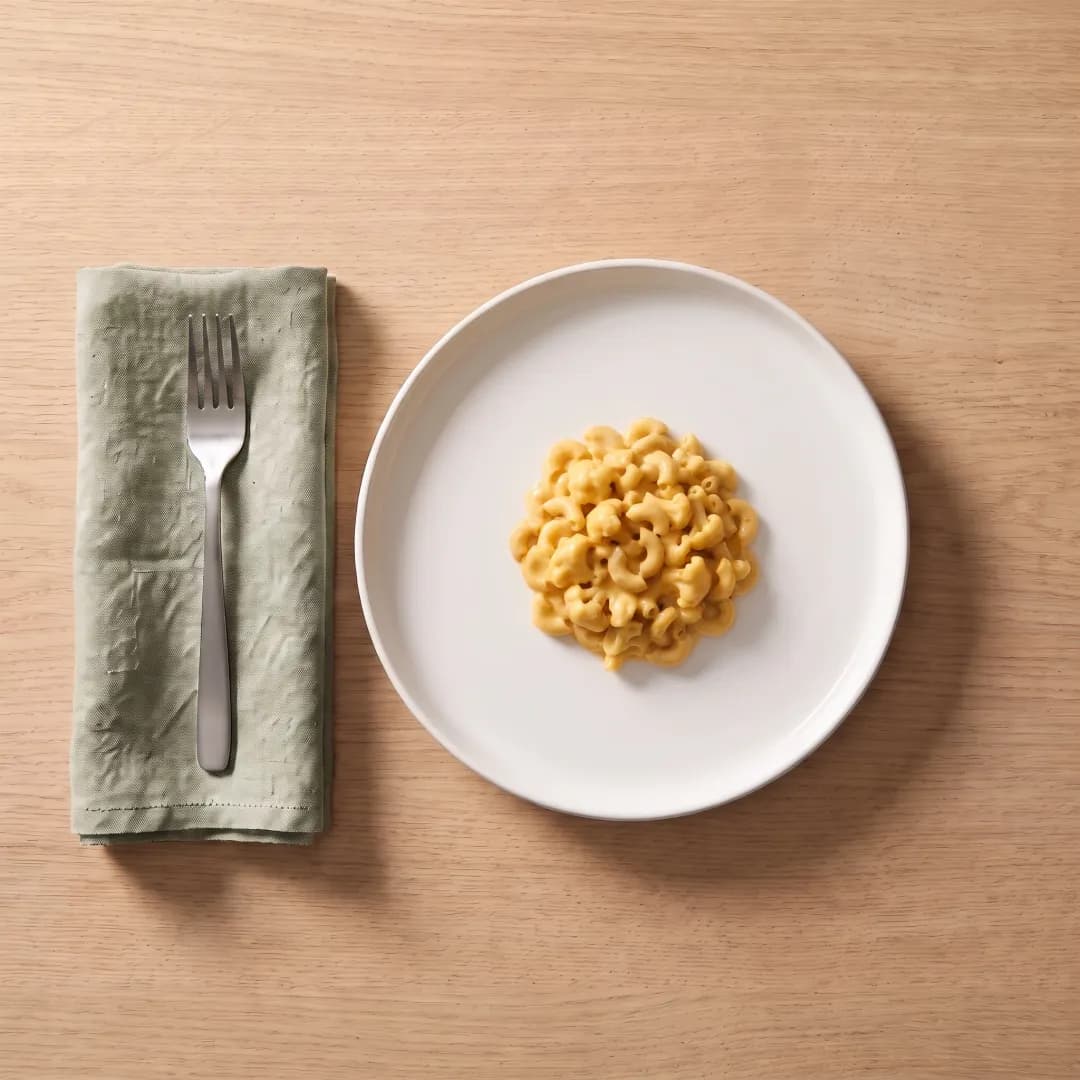
One serving is about ¾ cup. Prep 10 min · Cook 20 min.
Steps
Bring a large pot of water to a boil. Cook the chickpea elbow pasta 1 minute less than the package says, adding the cauliflower for the last 4 minutes, about 7 minutes in total.
Drain well; chickpea pasta foams, so rinse briefly with hot water.
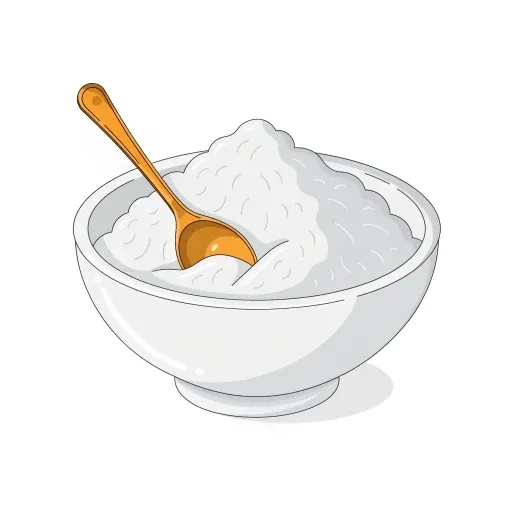
Whisk the cornstarch into the cold milk in the same pot, then heat over medium, stirring, until it simmers and thickens, about 4 minutes.
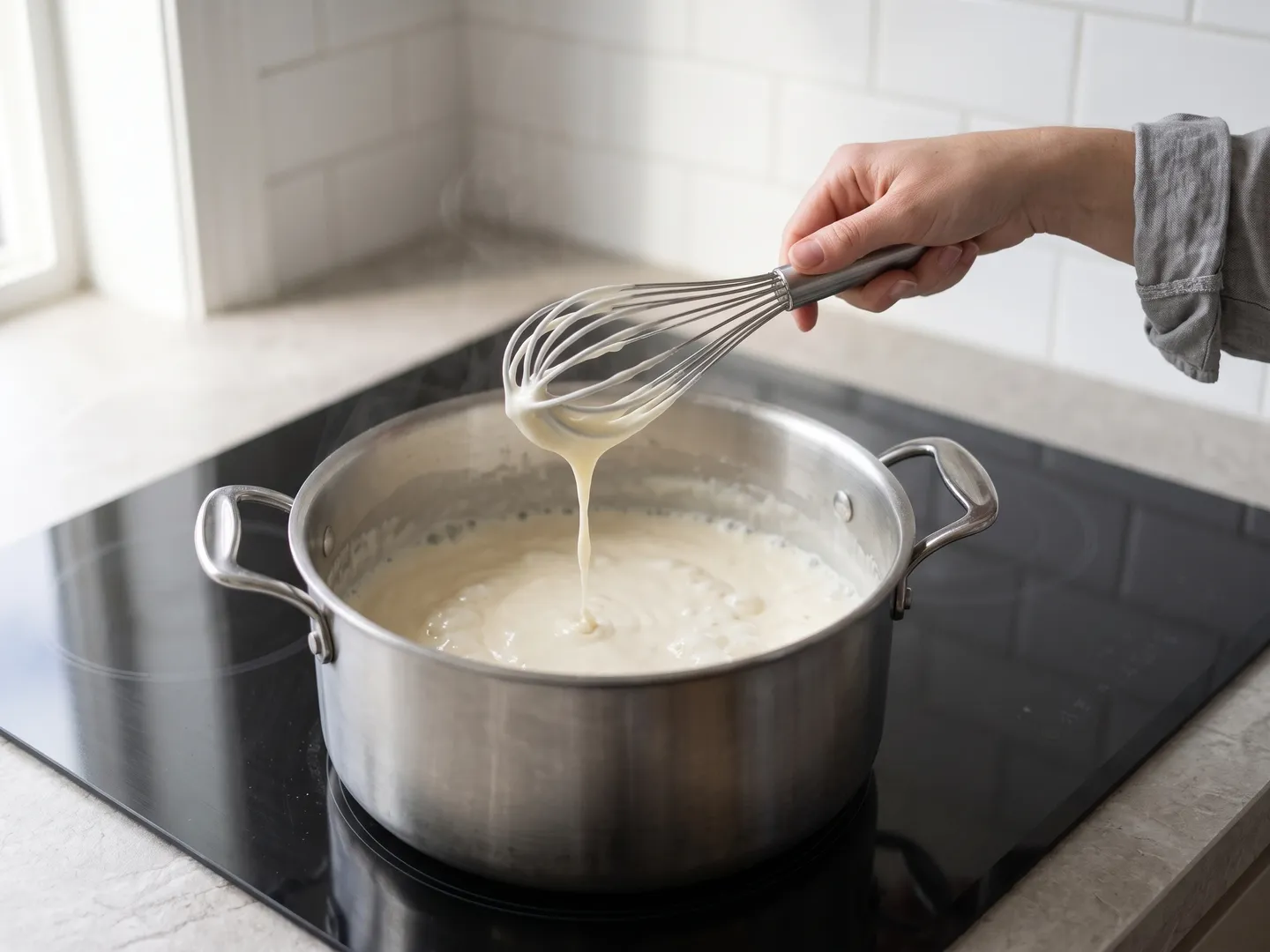
AI-generated illustrative image. Take the pot off the heat and stir in the sharp cheddar, Parmesan, mustard, garlic powder, smoked paprika, salt and black pepper until smooth.
Fold in the pasta and cauliflower and serve right away; the sauce thickens as it sits.
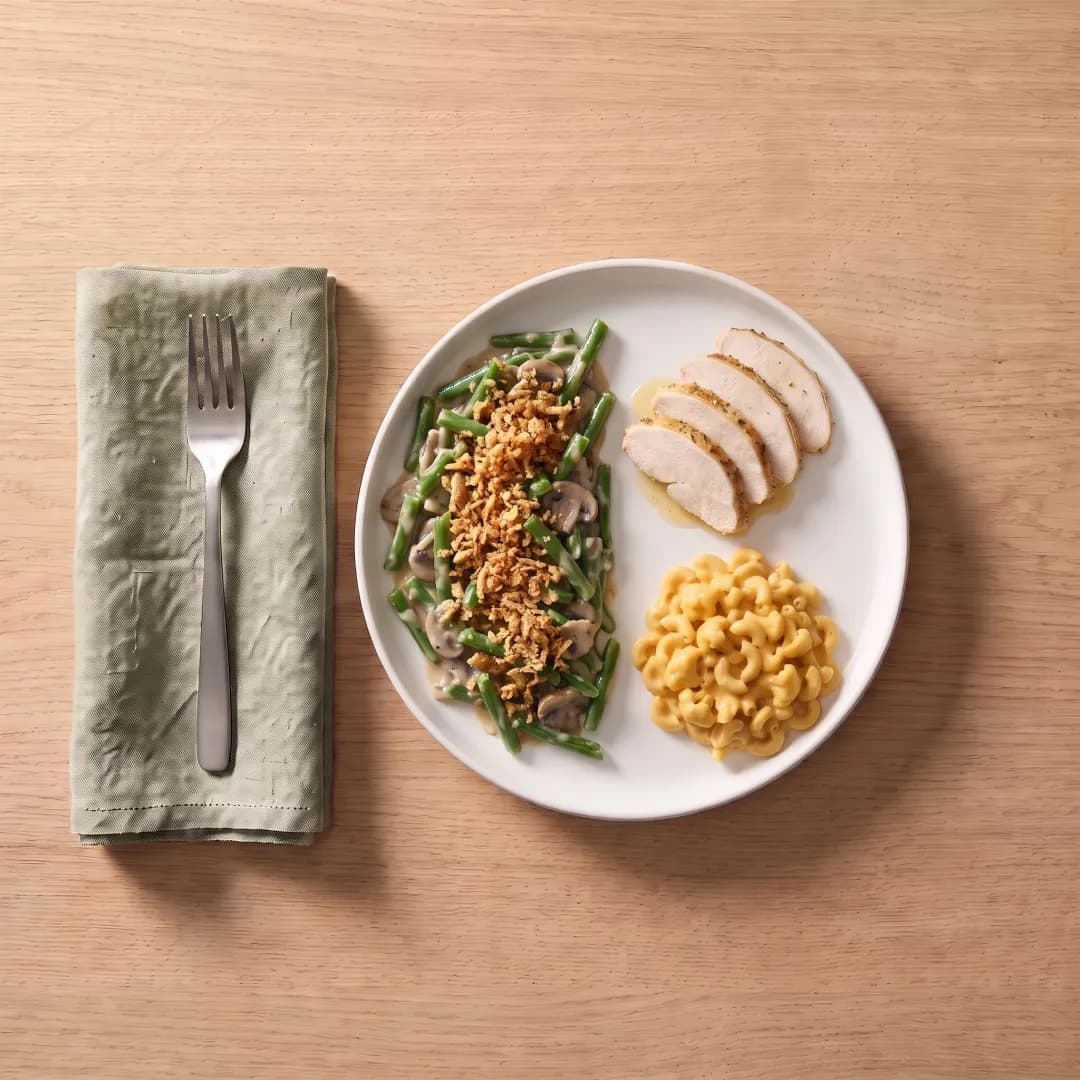
On the plate
Fills the carbohydrate quarter of the plate: about 14 g of carbohydrate per ¾ cup, less than classic mac and cheese, with more protein and fiber.
Nutrition
| Nutrient | Per serving (1/8 of recipe) |
|---|---|
| Calories (kcal) | 143 |
| Total carbohydrate | 14 g |
| Dietary fiber | 2 g |
| Total sugars | 4 g |
| Protein | 9 g |
| Total fat | 6 g |
| Saturated fat | 3 g |
| Sodium | 250 mg |
Total carbohydrate includes fiber, as on US nutrition labels. Values are calculated from USDA FoodData Central for the ingredients as listed and are estimates. How we calculate.
Where these numbers come from
| Ingredient | Weight | Carbs | Source |
|---|---|---|---|
| chickpea elbow pasta Chickpea pasta, elbows, dry | 100 g | 60.0 g | “PLANT-BASED PROTEIN PASTA, CHICKPEA ELBOWS”, USDA Branded, FDC ID 2392165 |
| cauliflower Cauliflower, raw | 450 g | 22.4 g | “Cauliflower, raw”, USDA SR Legacy, FDC ID 169986 |
| milk Milk, 1% | 360 g | 18.0 g | “Milk, lowfat, fluid, 1% milkfat, with added vitamin A and vitamin D”, USDA SR Legacy, FDC ID 170872 |
| cornstarch Cornstarch | 8 g | 7.3 g | “Cornstarch”, USDA SR Legacy, FDC ID 169698 |
| sharp cheddar Cheddar, sharp | 80 g | 1.7 g | “Cheese, cheddar, sharp, sliced”, USDA SR Legacy, FDC ID 170899 |
| Parmesan Parmesan, grated | 30 g | 4.2 g | “Cheese, parmesan, grated”, USDA SR Legacy, FDC ID 171247 |
| mustard Mustard, prepared | 5 g | <1 g | “Mustard, prepared, yellow”, USDA SR Legacy, FDC ID 172234 |
| garlic powder Garlic powder | 2 g | 1.1 g | “Spices, garlic powder”, USDA SR Legacy, FDC ID 171325 |
| smoked paprika Paprika | 1 g | <1 g | “Spices, paprika”, USDA SR Legacy, FDC ID 171329 |
| salt Salt | 1 g | 0.0 g | “Salt, table”, USDA SR Legacy, FDC ID 173468 |
| black pepper Black pepper, ground | <1 g | <1 g | “Spices, pepper, black”, USDA SR Legacy, FDC ID 170931 |
Counted as zero because the source has no value and the amount is 1 g or less per serving: cornstarch (); mustard (); garlic powder (); smoked paprika (); salt (); black pepper ().
Calculation engine v1.2.0.
Swaps and variations
- Baked version
- Spread in a baking dish, top with 2 tbsp Parmesan and broil 3 minutes until golden.
- Regular pasta
- Carbs per serving go up and fiber goes down.
Storage
Refrigerate within 2 hours, up to 3 days; reheat with a splash of milk until it reaches 165°F (74°C).
Nutrition values are estimates calculated from USDA data for the ingredients as listed. This recipe is information, not medical advice; decisions about your diet belong to you and your healthcare team. How we calculate.
Printed from diabetesbites.com/recipes/lighter-mac-and-cheese. Nutrition per serving is calculated from USDA FoodData Central for the ingredients as listed.
FAQs
Quick answers about lighter mac & cheese.
How do you make mac and cheese healthier?
Use a legume pasta, bulk it up with cauliflower and make the sauce with milk and sharp cheese instead of cream and processed cheese.
Can people with diabetes eat mac and cheese?
Three-quarters of a cup of this version has about 14 g of carbohydrate, less than classic mac and cheese. How it fits a meal plan is for each person and their care team to decide.
Does chickpea pasta taste different?
Slightly nutty; under a cheese sauce most people don't notice.
How was this recipe?
Be the first to rate it.