Garlic Parmesan Spaghetti Squash
Roasted spaghetti squash tossed with garlic, Parmesan and toasted pumpkin seeds, an easy stand-in for pasta. About 15 g of carbohydrate per cup.
One serving
One serving is about 1 cup. Prep 10 min · Cook 40 min · Rest or chill 5 min.
Steps
Heat the oven to 400°F (200°C) and let it preheat for 15 minutes.
Brush the cut sides of the spaghetti squash with half the olive oil and place it cut side down on a dark sheet pan lined with parchment.
Roast until a knife slides easily into the skin, about 40 minutes.
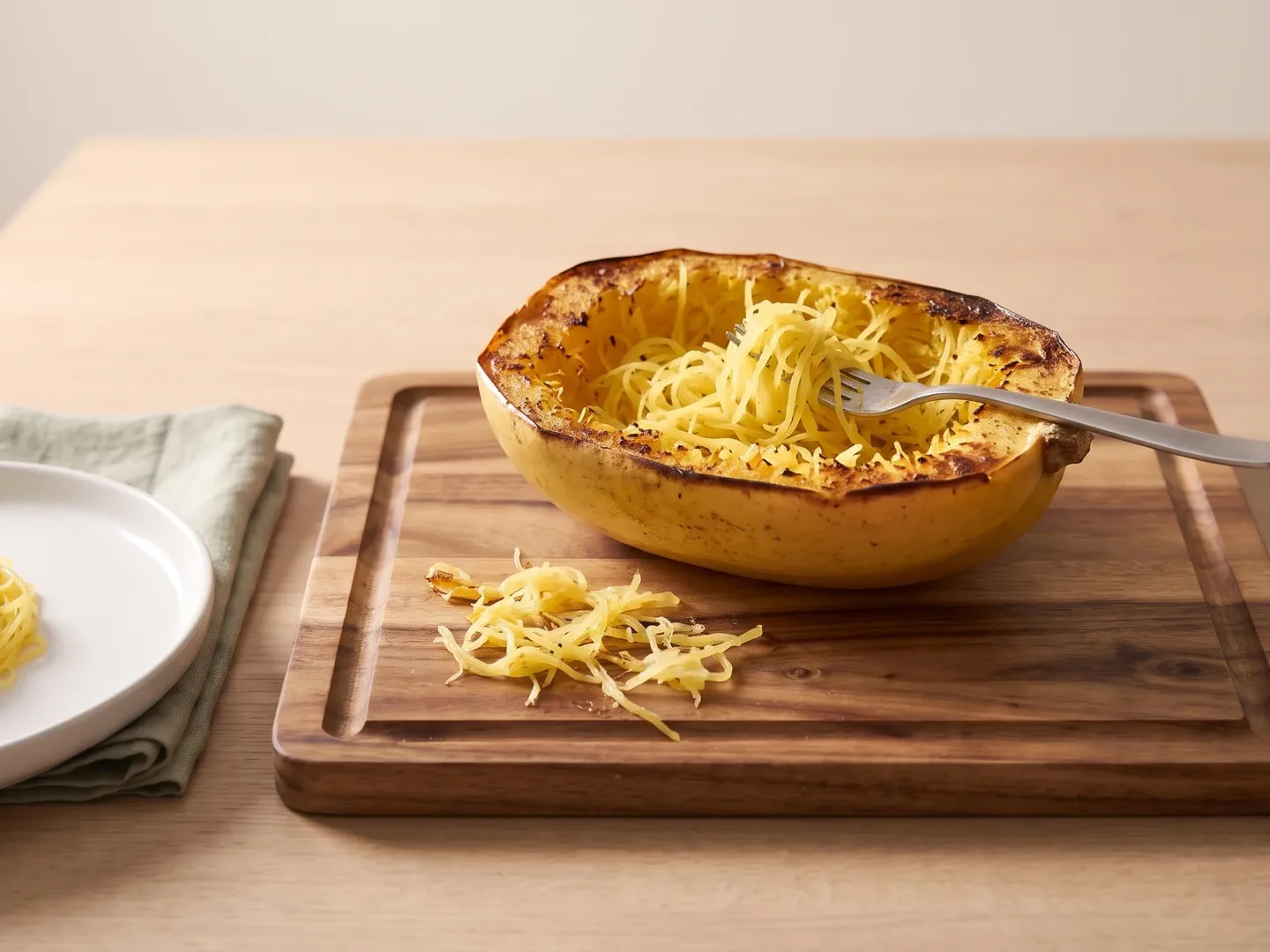
Let it cool 5 minutes, then scrape the flesh into long strands with a fork.
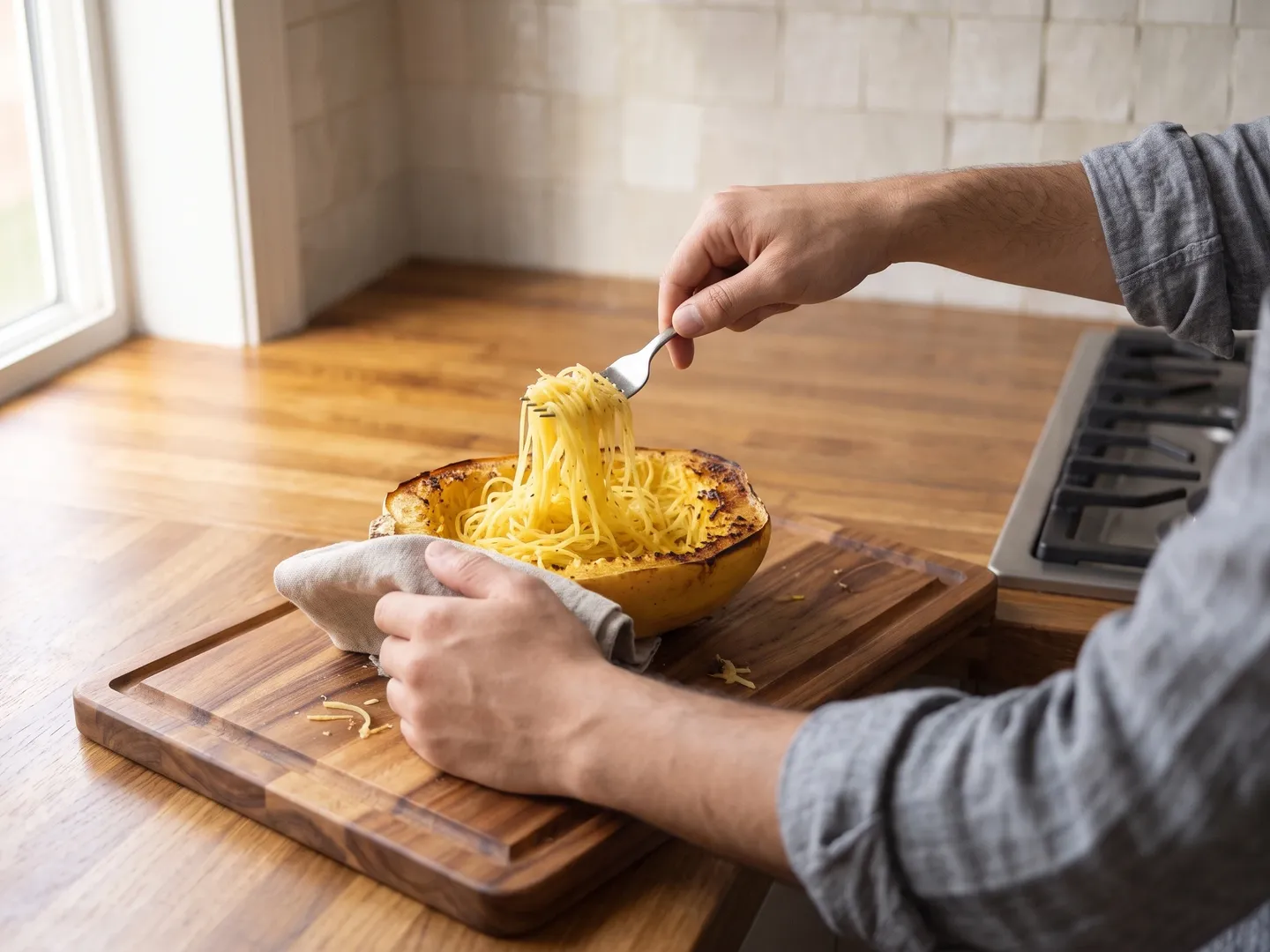
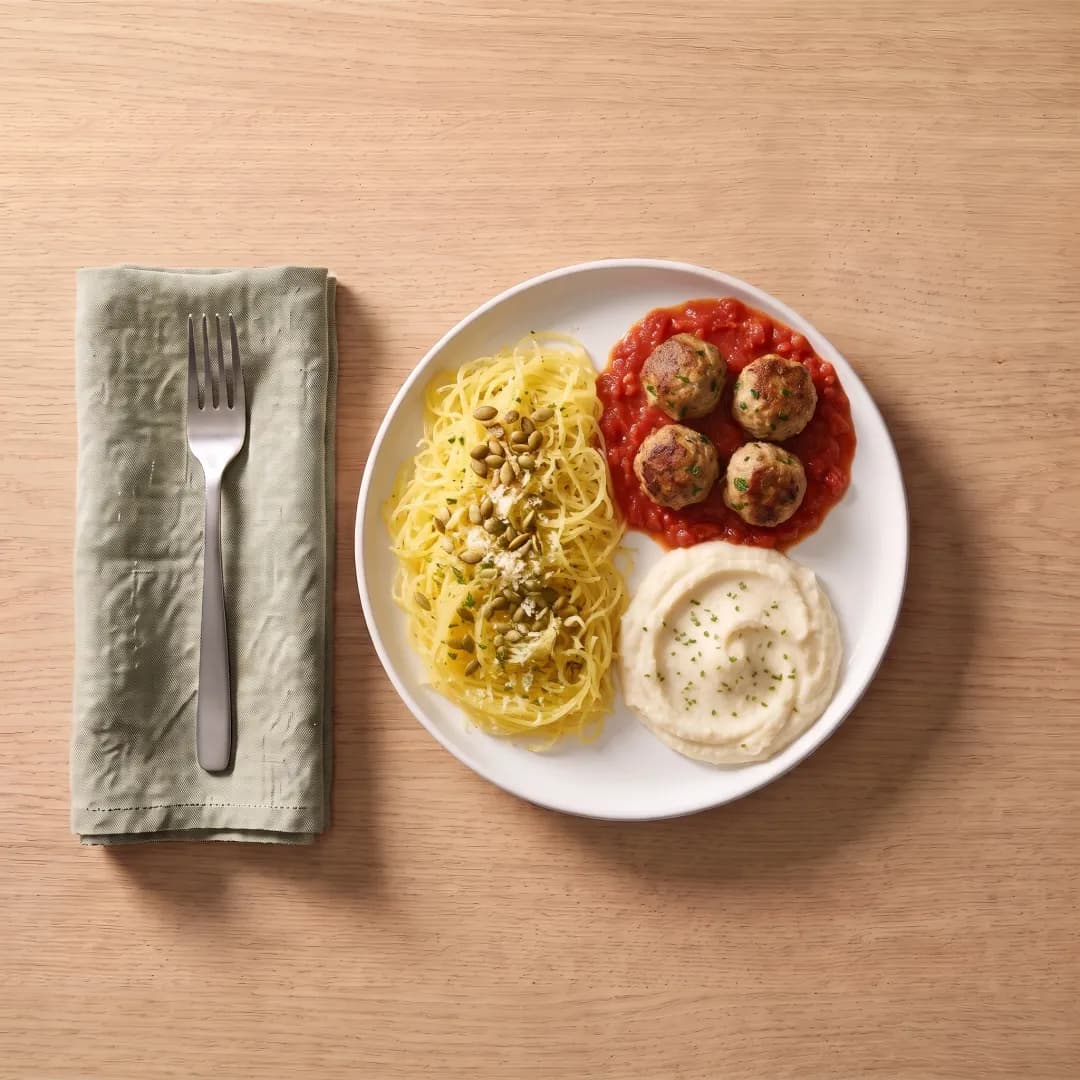
AI-generated illustrative image. Warm the rest of the oil in a skillet over medium heat, add the garlic for 30 seconds, then toss in the strands with the salt and black pepper.
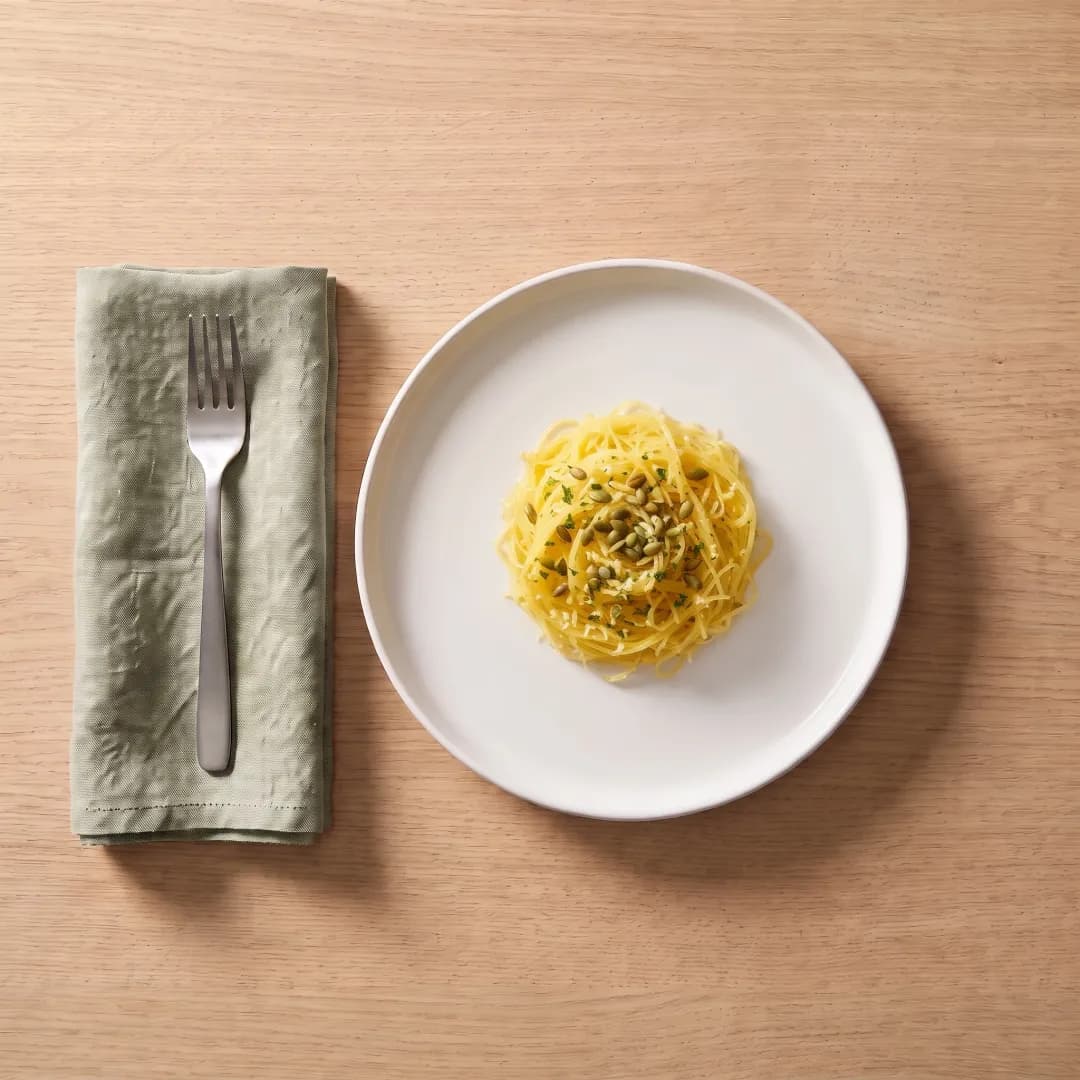
Off the heat, toss with the Parmesan, then top with the pumpkin seeds and parsley.
On the plate
Fills the non-starchy vegetable half of the plate, served like pasta. Pair it with Turkey Meatballs for the protein quarter.
Nutrition
| Nutrient | Per serving (1/6 of recipe) |
|---|---|
| Calories (kcal) | 142 |
| Total carbohydrate | 15 g |
| Dietary fiber | 3 g |
| Total sugars | 5 g |
| Protein | 5 g |
| Total fat | 8 g |
| Saturated fat | 2 g |
| Sodium | 280 mg |
Total carbohydrate includes fiber, as on US nutrition labels. Values are calculated from USDA FoodData Central for the ingredients as listed and are estimates. How we calculate.
Where these numbers come from
| Ingredient | Weight | Carbs | Source |
|---|---|---|---|
| spaghetti squash Spaghetti squash, raw | 1100 g | 76.0 g | “Squash, winter, spaghetti, raw”, USDA SR Legacy, FDC ID 169298 |
| olive oil Olive oil | 14 g | 0.0 g | “Oil, olive, salad or cooking”, USDA SR Legacy, FDC ID 171413 |
| garlic Garlic, raw | 6 g | 2.0 g | “Garlic, raw”, USDA SR Legacy, FDC ID 169230 |
| Parmesan Parmesan, grated | 50 g | 7.0 g | “Cheese, parmesan, grated”, USDA SR Legacy, FDC ID 171247 |
| pumpkin seeds Pumpkin seeds (pepitas) | 30 g | 3.2 g | “Seeds, pumpkin and squash seed kernels, dried”, USDA SR Legacy, FDC ID 170556 |
| salt Salt | 2 g | 0.0 g | “Salt, table”, USDA SR Legacy, FDC ID 173468 |
| black pepper Black pepper, ground | <1 g | <1 g | “Spices, pepper, black”, USDA SR Legacy, FDC ID 170931 |
| parsley Parsley, fresh | 4 g | <1 g | “Parsley, fresh”, USDA SR Legacy, FDC ID 170416 |
Counted as zero because the source has no value and the amount is 1 g or less per serving: garlic (); salt (); black pepper (); parsley ().
Calculation engine v1.3.0.
Swaps and variations
- Microwave
- Pierce the whole squash and microwave 5 minutes, halve and seed it, then microwave it cut side down in a dish with ¼ cup water for 10 to 12 minutes.
Storage
Refrigerate within 2 hours, up to 4 days; reheat in a skillet so it doesn’t get watery.
Nutrition values are estimates calculated from USDA data for the ingredients as listed. This recipe is information, not medical advice; decisions about your diet belong to you and your healthcare team. How we calculate.
Printed from diabetesbites.com/recipes/garlic-parmesan-spaghetti-squash. Nutrition per serving is calculated from USDA FoodData Central for the ingredients as listed.
FAQs
Quick answers about garlic parmesan spaghetti squash.
How do you know when spaghetti squash is done?
A knife slides into the skin easily and the flesh pulls into strands with a fork.
How many carbohydrates are in spaghetti squash?
About 15 g per cup in this recipe, toppings included, with 3 g of fiber. A cup of cooked pasta has several times as much.
How was this recipe?
Be the first to rate it.