Black-Eyed Peas & Collard Greens
The Southern New Year’s dish of black-eyed peas and collard greens, made smoky with paprika instead of bacon or ham hock. About 14 g of carbohydrate and 6 g of fiber per ¾ cup.
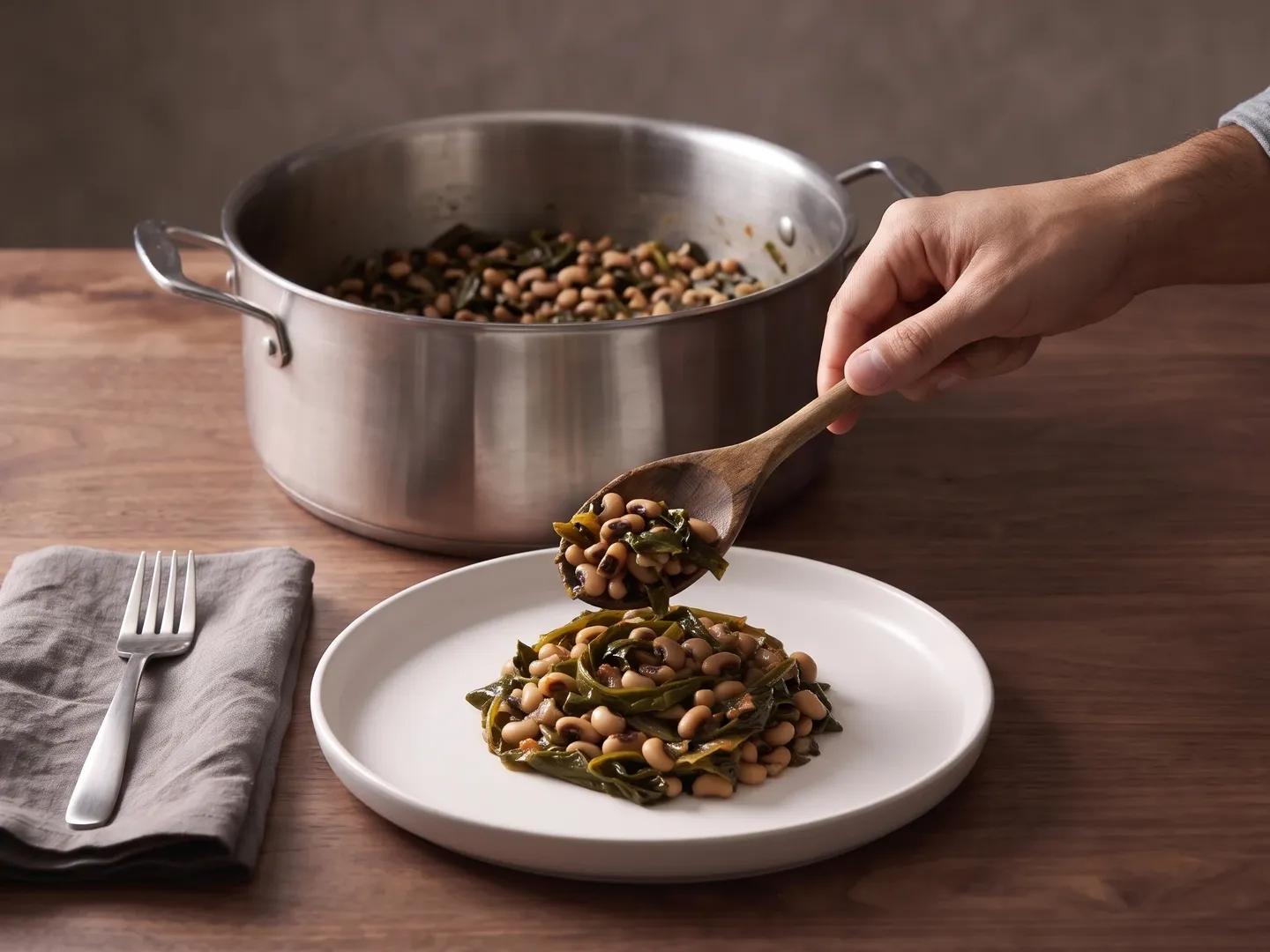
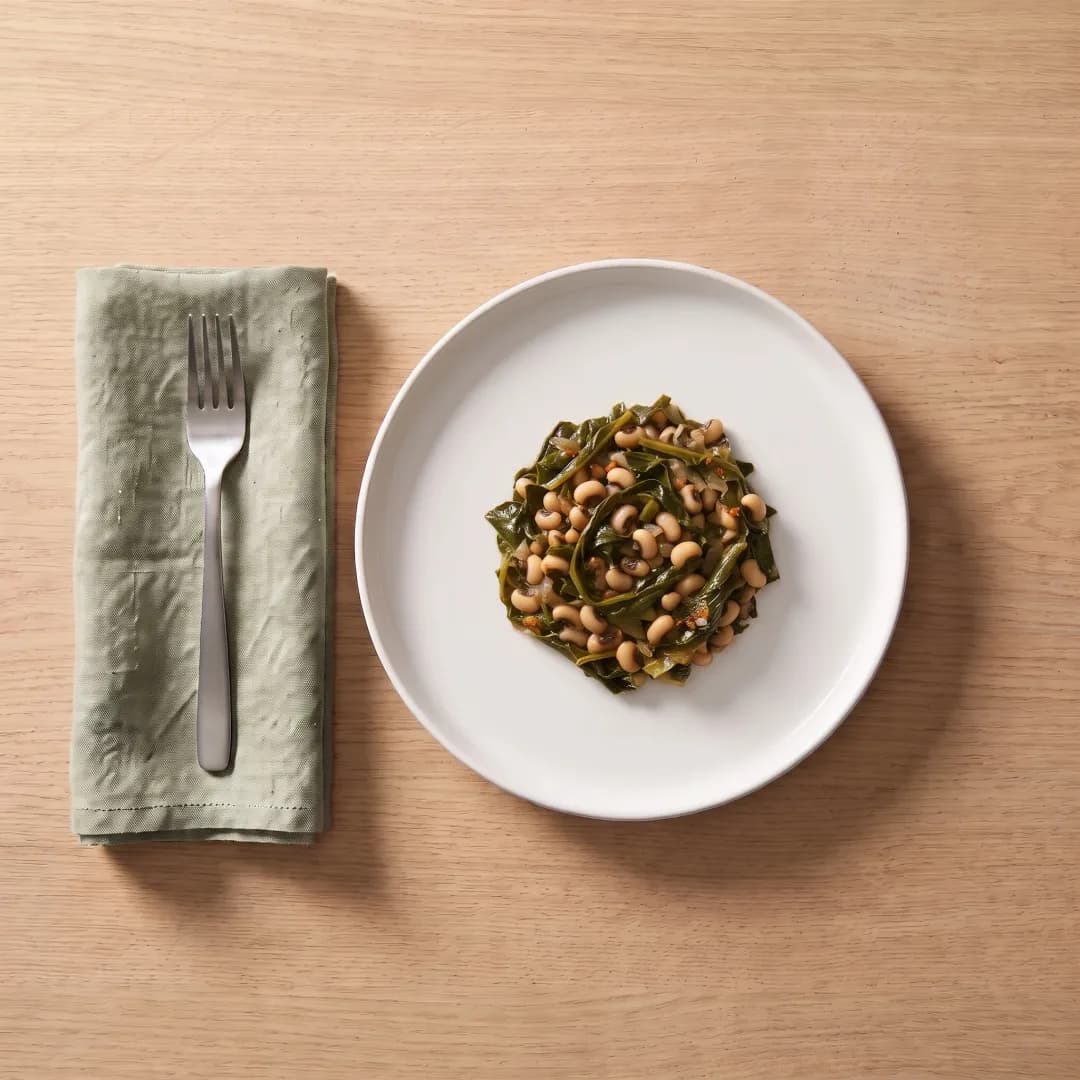
One serving
One serving is about ¾ cup. Prep 15 min · Cook 25 min.
Steps
Heat the olive oil in a large pot over medium heat and cook the onion until soft, about 5 minutes.
Stir in the garlic and smoked paprika and cook 30 seconds.
Add the collard greens a handful at a time, stirring until they wilt, then pour in the chicken broth.
Cover and simmer until the greens are tender, about 15 minutes.
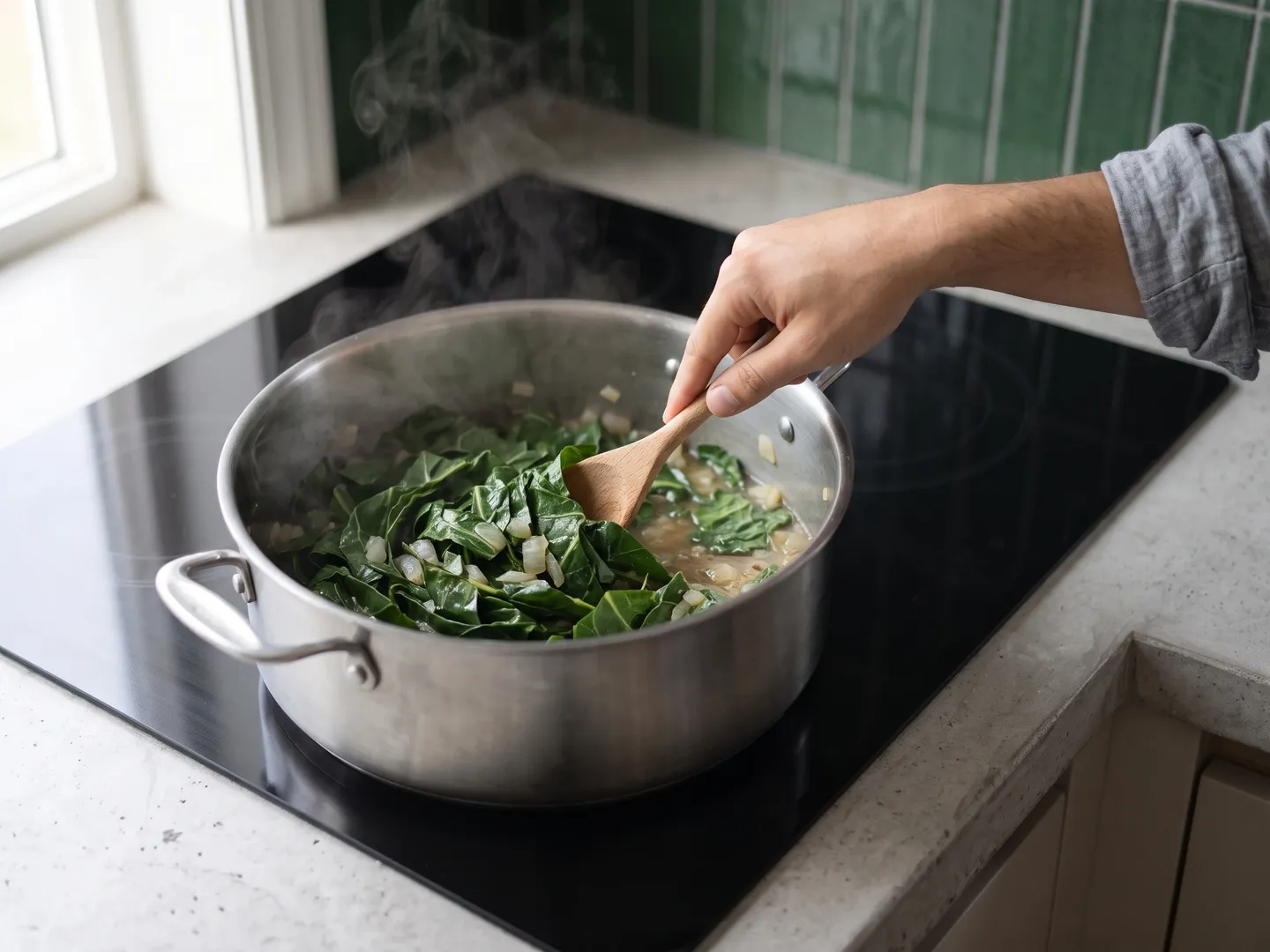
AI-generated illustrative image. Stir in the black-eyed peas, cider vinegar, salt and black pepper and simmer uncovered until heated through, about 5 minutes.
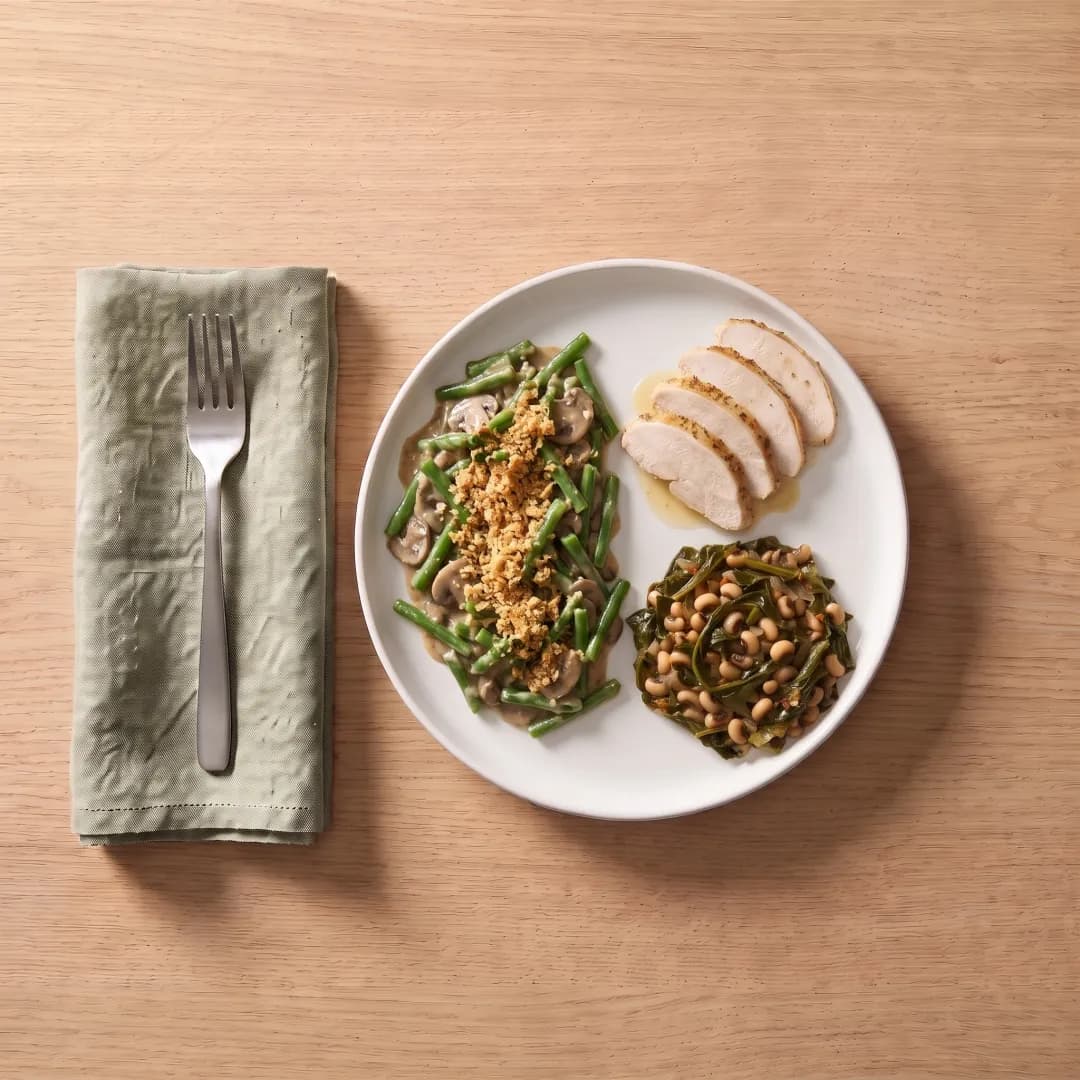
On the plate
Fills the carbohydrate quarter of the plate: the peas count as the starch and the greens add fiber. Pair it with Herb-Roasted Turkey Breast and a non-starchy vegetable.
Nutrition
| Nutrient | Per serving (1/8 of recipe) |
|---|---|
| Calories (kcal) | 96 |
| Total carbohydrate | 14 g |
| Dietary fiber | 6 g |
| Total sugars | 2 g |
| Protein | 6 g |
| Total fat | 2 g |
| Saturated fat | <1 g |
| Sodium | 205 mg |
Total carbohydrate includes fiber, as on US nutrition labels. Values are calculated from USDA FoodData Central for the ingredients as listed and are estimates. How we calculate.
Where these numbers come from
| Ingredient | Weight | Carbs | Source |
|---|---|---|---|
| olive oil Olive oil | 14 g | 0.0 g | “Oil, olive, salad or cooking”, USDA SR Legacy, FDC ID 171413 |
| onion Onion, raw | 110 g | 10.3 g | “Onions, raw”, USDA SR Legacy, FDC ID 170000 |
| garlic Garlic, raw | 9 g | 3.0 g | “Garlic, raw”, USDA SR Legacy, FDC ID 169230 |
| smoked paprika Paprika | 2 g | 1.1 g | “Spices, paprika”, USDA SR Legacy, FDC ID 171329 |
| collard greens Collard greens, raw | 450 g | 24.4 g | “Collards, raw”, USDA SR Legacy, FDC ID 170406 |
| chicken broth Chicken broth, reduced sodium | 240 g | <1 g | “Soup, chicken broth, less/reduced sodium, ready to serve”, USDA SR Legacy, FDC ID 172888 |
| black-eyed peas Black-eyed peas, cooked | 360 g | 74.9 g | “Cowpeas, common (blackeyes, crowder, southern), mature seeds, cooked, boiled, without salt”, USDA SR Legacy, FDC ID 173759 |
| cider vinegar Cider vinegar | 15 g | <1 g | “Vinegar, cider”, USDA SR Legacy, FDC ID 173469 |
| salt Salt | 3 g | 0.0 g | “Salt, table”, USDA SR Legacy, FDC ID 173468 |
| black pepper Black pepper, ground | <1 g | <1 g | “Spices, pepper, black”, USDA SR Legacy, FDC ID 170931 |
Counted as zero because the source has no value and the amount is 1 g or less per serving: smoked paprika (); salt (); black pepper ().
Calculation engine v1.3.0.
Swaps and variations
- Kale
- Use the same weight of kale instead of collards and simmer only 8 minutes.
- Vegetarian
- Use low-sodium vegetable broth.
Storage
Refrigerate within 2 hours, up to 4 days, and reheat until steaming. It tastes even better the next day.
Nutrition values are estimates calculated from USDA data for the ingredients as listed. This recipe is information, not medical advice; decisions about your diet belong to you and your healthcare team. How we calculate.
Printed from diabetesbites.com/recipes/black-eyed-peas-collard-greens. Nutrition per serving is calculated from USDA FoodData Central for the ingredients as listed.
FAQs
Quick answers about black-eyed peas & collard greens.
Why do people eat black-eyed peas and greens on New Year’s Day?
It’s a Southern tradition: the peas stand for coins and the greens for money in the year ahead.
How many carbohydrates are in black-eyed peas and collard greens?
About 14 g per ¾ cup in this recipe, with 6 g of fiber and 6 g of protein.
How was this recipe?
Be the first to rate it.