Healthy Tuna Salad
Tuna salad made creamy with Greek yogurt and a little mayonnaise, with celery, dill and avocado, served in butter lettuce cups. About 10 g of carbohydrate and 27 g of protein per serving.
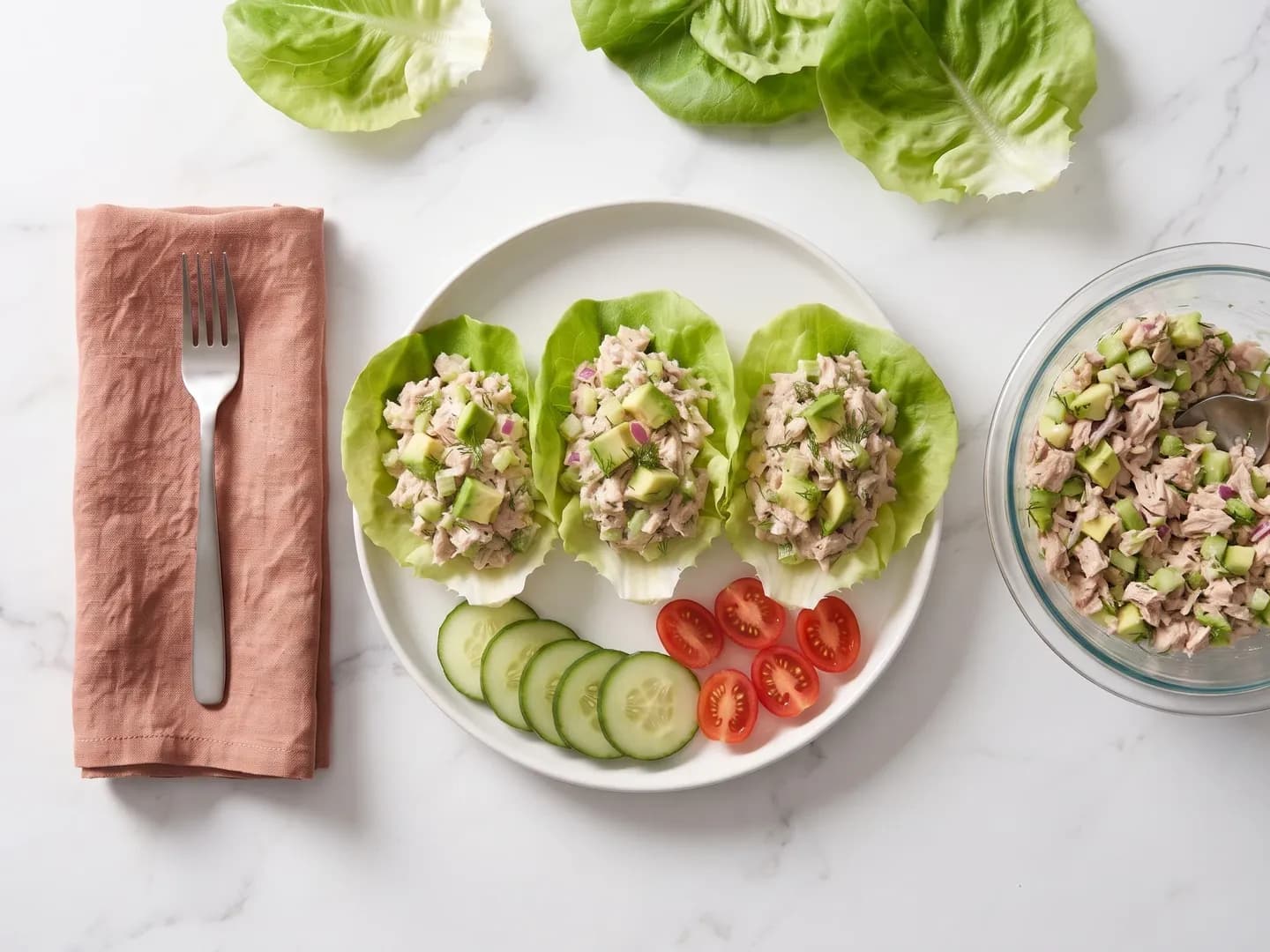
One serving
One serving is about ¾ cup tuna salad in 3 lettuce cups, with cucumber and tomatoes. Prep 15 min · Cook 0 min.
Steps
Flake the tuna into a glass bowl with a fork.
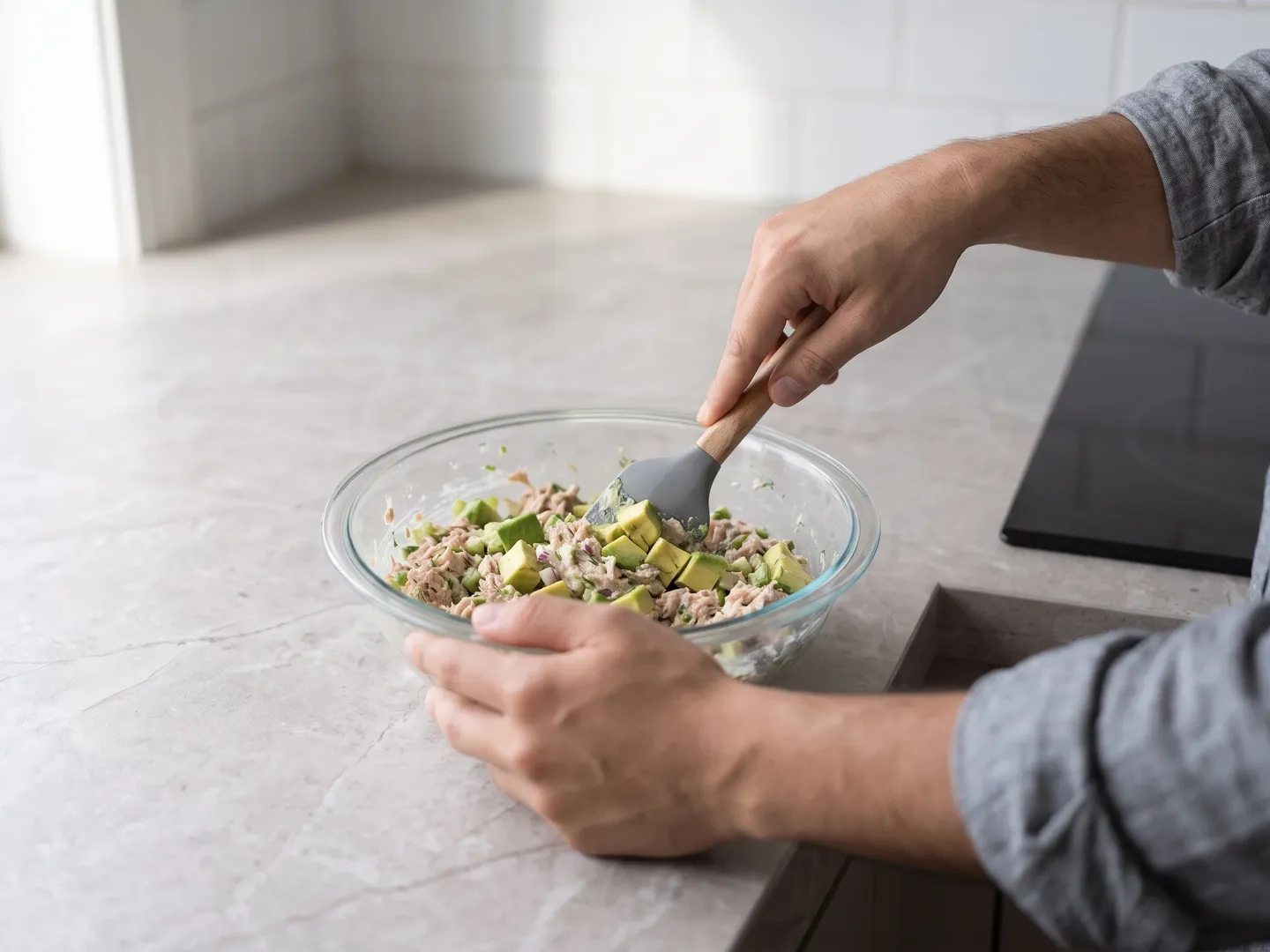
Stir in the Greek yogurt, mayonnaise, mustard, lemon juice, celery, red onion, dill, salt and black pepper.
Gently fold in the avocado so it stays in pieces.
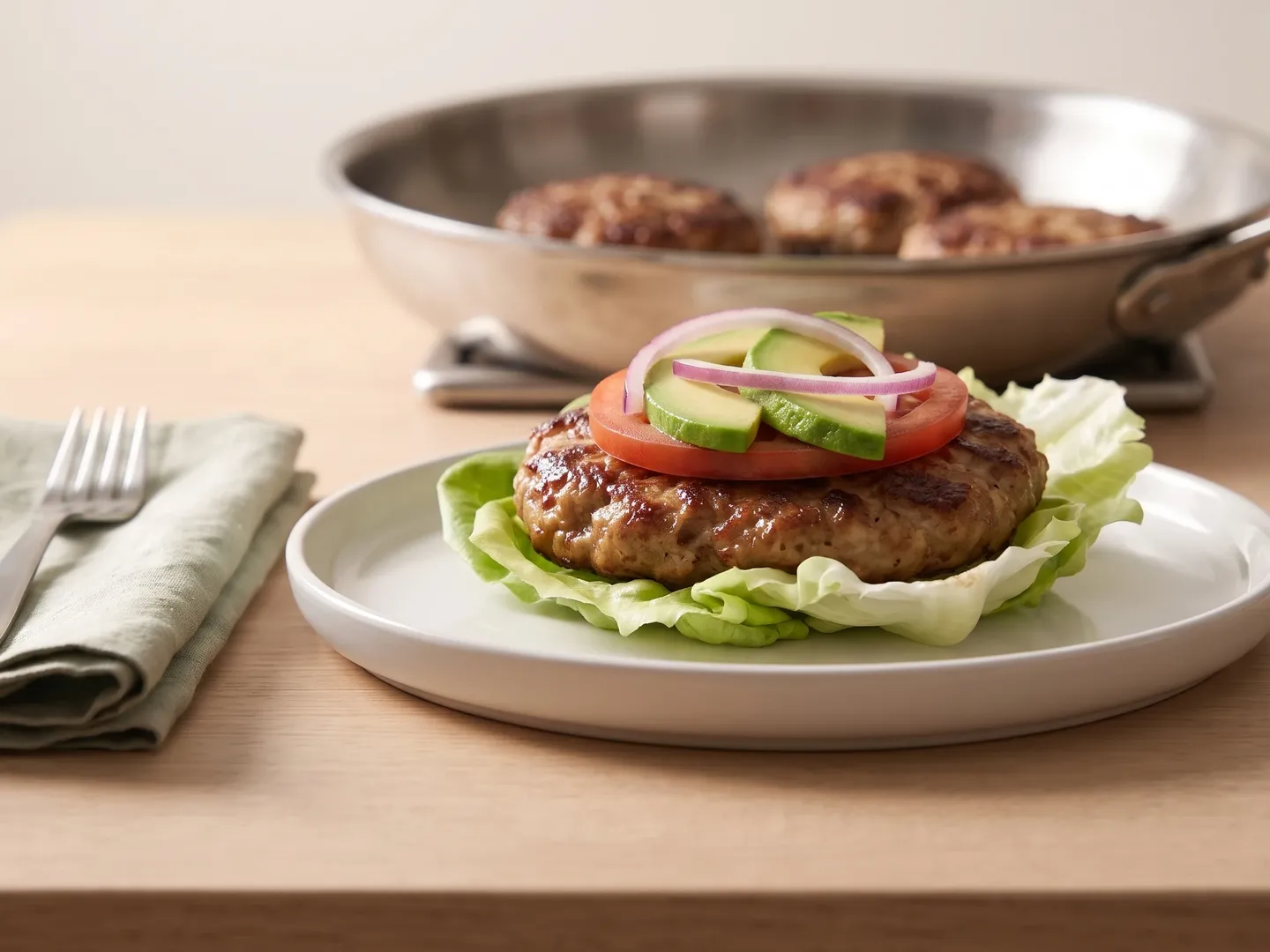
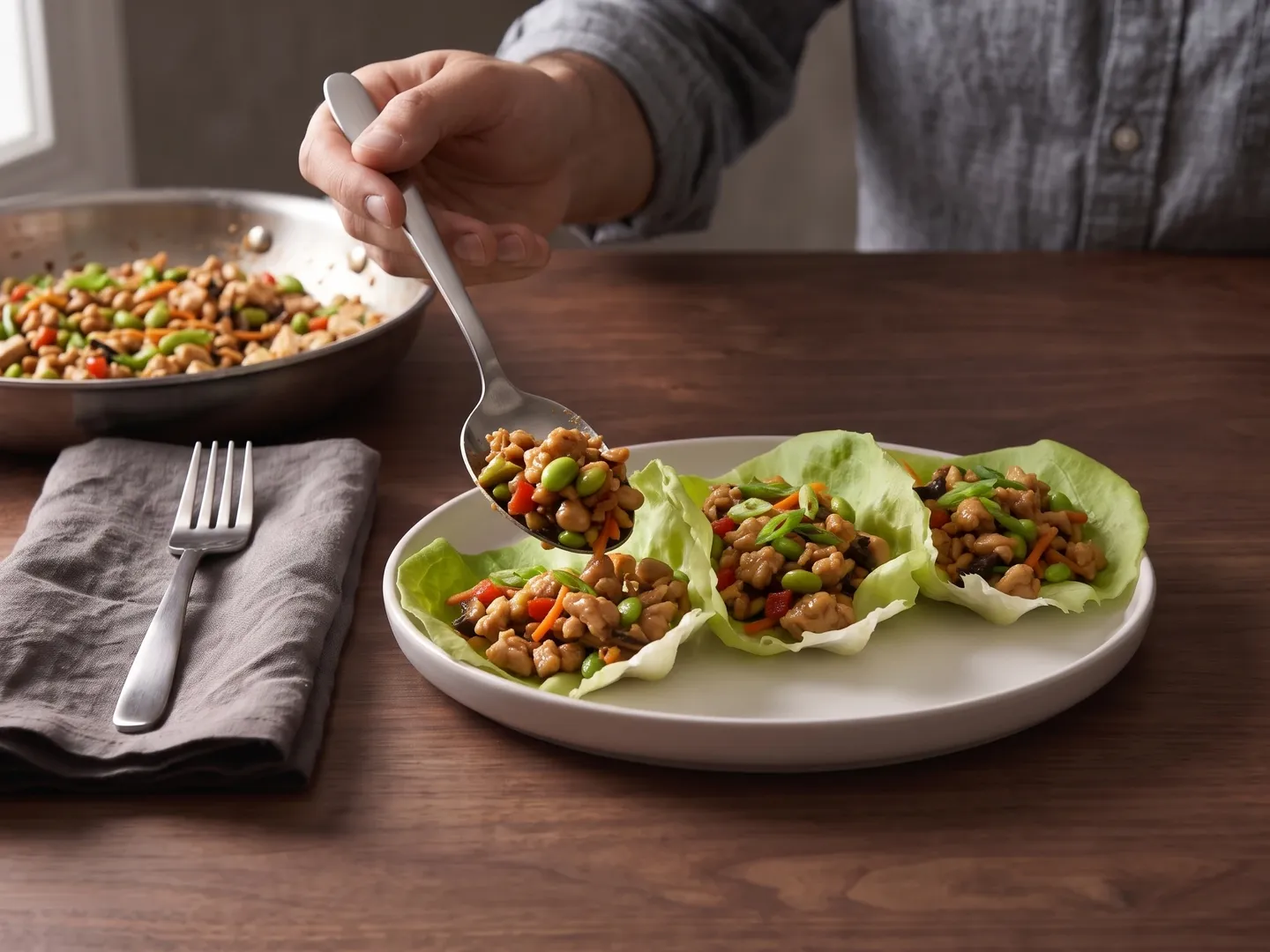
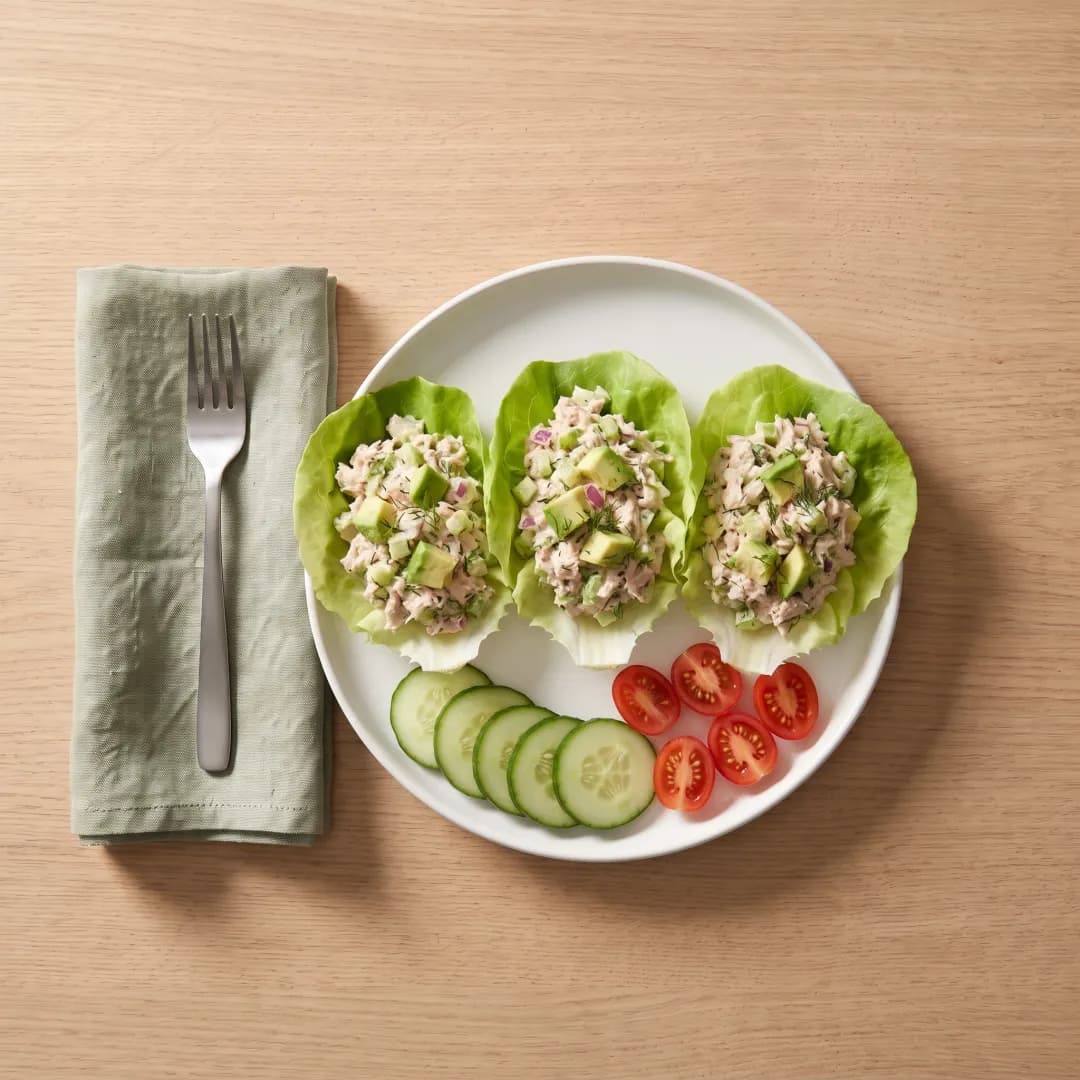
AI-generated illustrative image. Spoon the tuna salad into the butter lettuce leaves, about 3 per person, and serve with the cucumber slices and cherry tomatoes.
On the plate
A complete lunch: lettuce, cucumber and tomatoes fill half the plate and the tuna salad covers the protein. About 10 g of carbohydrate per serving.
Nutrition
| Nutrient | Per serving (1/4 of recipe) |
|---|---|
| Calories (kcal) | 215 |
| Total carbohydrate | 10 g |
| Dietary fiber | 4 g |
| Total sugars | 4 g |
| Protein | 27 g |
| Total fat | 8 g |
| Saturated fat | 1 g |
| Sodium | 225 mg |
Total carbohydrate includes fiber, as on US nutrition labels. Values are calculated from USDA FoodData Central for the ingredients as listed and are estimates. How we calculate.
Where these numbers come from
| Ingredient | Weight | Carbs | Source |
|---|---|---|---|
| tuna Tuna, light, canned in water, no salt added | 340 g | 0.0 g | “Fish, tuna, light, canned in water, without salt, drained solids”, USDA SR Legacy, FDC ID 171986 |
| Greek yogurt Greek yogurt, plain, nonfat | 120 g | 4.3 g | “Yogurt, Greek, plain, nonfat (Includes foods for USDA's Food Distribution Program)”, USDA SR Legacy, FDC ID 170894 |
| mayonnaise Mayonnaise, reduced fat, with olive oil | 28 g | 0.0 g | “Mayonnaise, reduced fat, with olive oil”, USDA SR Legacy, FDC ID 171443 |
| mustard Mustard, prepared | 10 g | <1 g | “Mustard, prepared, yellow”, USDA SR Legacy, FDC ID 172234 |
| lemon juice Lemon juice | 15 g | 1.0 g | “Lemon juice, raw”, USDA SR Legacy, FDC ID 167747 |
| celery Celery, raw | 100 g | 3.0 g | “Celery, raw”, USDA SR Legacy, FDC ID 169988 |
| red onion Onion, raw | 40 g | 3.7 g | “Onions, raw”, USDA SR Legacy, FDC ID 170000 |
| dill Dill, fresh | 4 g | <1 g | “Dill weed, fresh”, USDA SR Legacy, FDC ID 172233 |
| avocado Avocado, Hass | 100 g | 8.6 g | “Avocados, raw, California”, USDA SR Legacy, FDC ID 171706 |
| salt Salt | <1 g | 0.0 g | “Salt, table”, USDA SR Legacy, FDC ID 173468 |
| black pepper Black pepper, ground | <1 g | <1 g | “Spices, pepper, black”, USDA SR Legacy, FDC ID 170931 |
| butter lettuce Butter lettuce, raw | 200 g | 4.5 g | “Lettuce, butterhead (includes boston and bibb types), raw”, USDA SR Legacy, FDC ID 168429 |
| cucumber Cucumber, with peel | 200 g | 7.3 g | “Cucumber, with peel, raw”, USDA SR Legacy, FDC ID 168409 |
| cherry tomatoes Tomato, raw | 150 g | 5.8 g | “Tomatoes, red, ripe, raw, year round average”, USDA SR Legacy, FDC ID 170457 |
Counted as zero because the source has no value and the amount is 1 g or less per serving: dill (total sugars); salt (); black pepper ().
Calculation engine v1.3.0.
Swaps and variations
- Salmon
- Use the same weight of canned salmon, skin and bones removed.
Storage
Refrigerate the tuna salad without the avocado within 2 hours, up to 3 days; add the avocado when serving.
Nutrition values are estimates calculated from USDA data for the ingredients as listed. This recipe is information, not medical advice; decisions about your diet belong to you and your healthcare team. How we calculate.
Printed from diabetesbites.com/recipes/healthy-tuna-salad. Nutrition per serving is calculated from USDA FoodData Central for the ingredients as listed.
FAQs
Quick answers about healthy tuna salad.
How do you make tuna salad without mayo?
Use all Greek yogurt plus 1 tsp olive oil; it stays creamy and gains protein.
How many carbohydrates are in this tuna salad?
About 10 g per lunch, vegetables included, with 27 g of protein.
How was this recipe?
Be the first to rate it.