Peanut Butter Protein Cookies
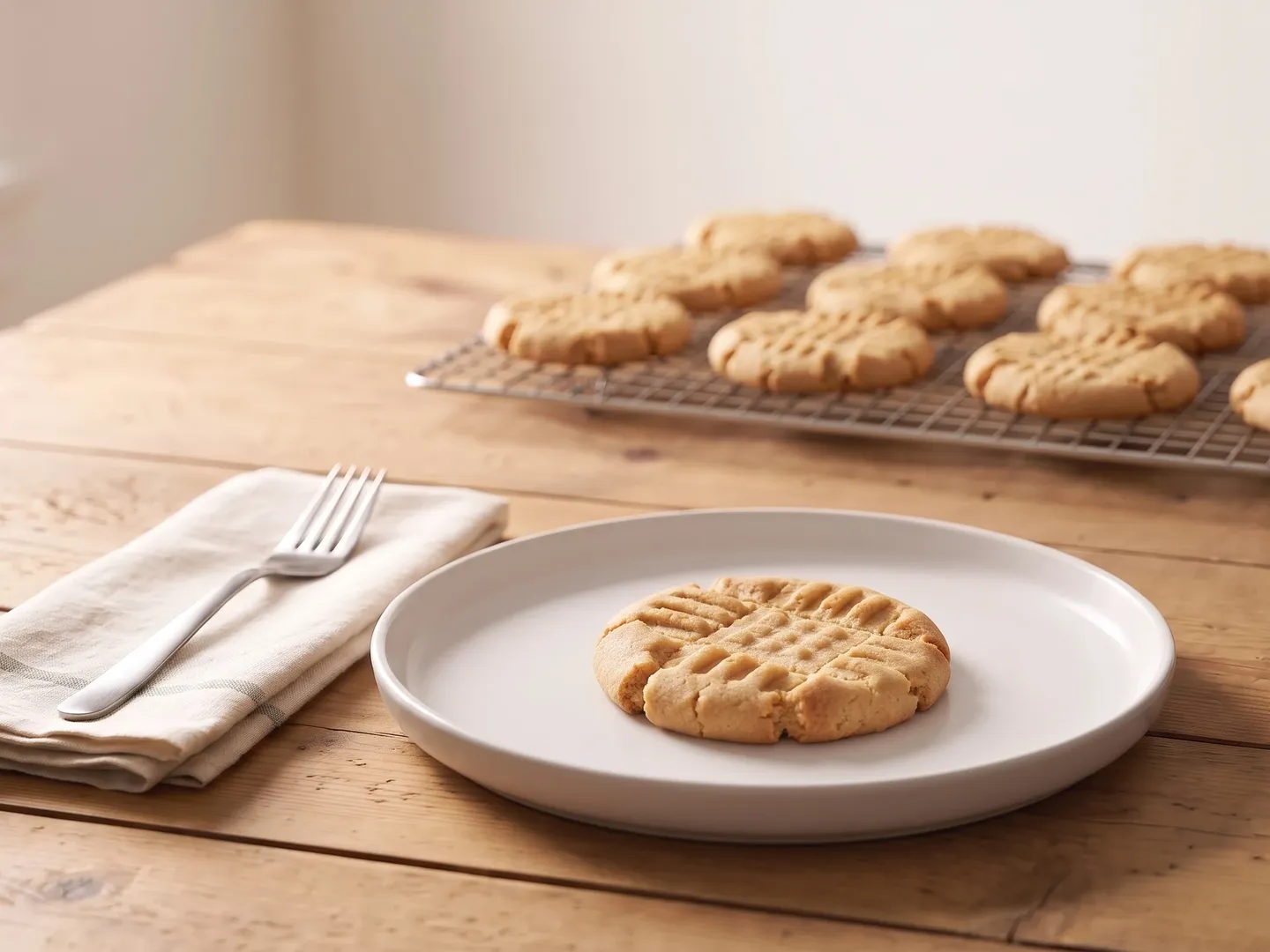
Soft peanut butter protein cookies made with almond flour and vanilla whey, sweetened with allulose and marked with a fork. About 10 g of carbohydrate and 8 g of protein per cookie.
One serving
One serving is 1 cookie (makes 12). Prep 10 min · Cook 11 min · Rest or chill 10 min.
Steps
Heat the oven to 325°F (165°C), line a light-colored sheet pan with parchment and let the oven preheat for 15 minutes. Whey and allulose both brown quickly, so the oven is lower than for regular cookies.
Stir the peanut butter, egg, milk, allulose and vanilla extract in a large bowl until smooth.
Add the almond flour, protein powder, baking soda and salt and stir into a soft, slightly sticky dough. If it is too sticky to roll, chill it for 10 minutes.
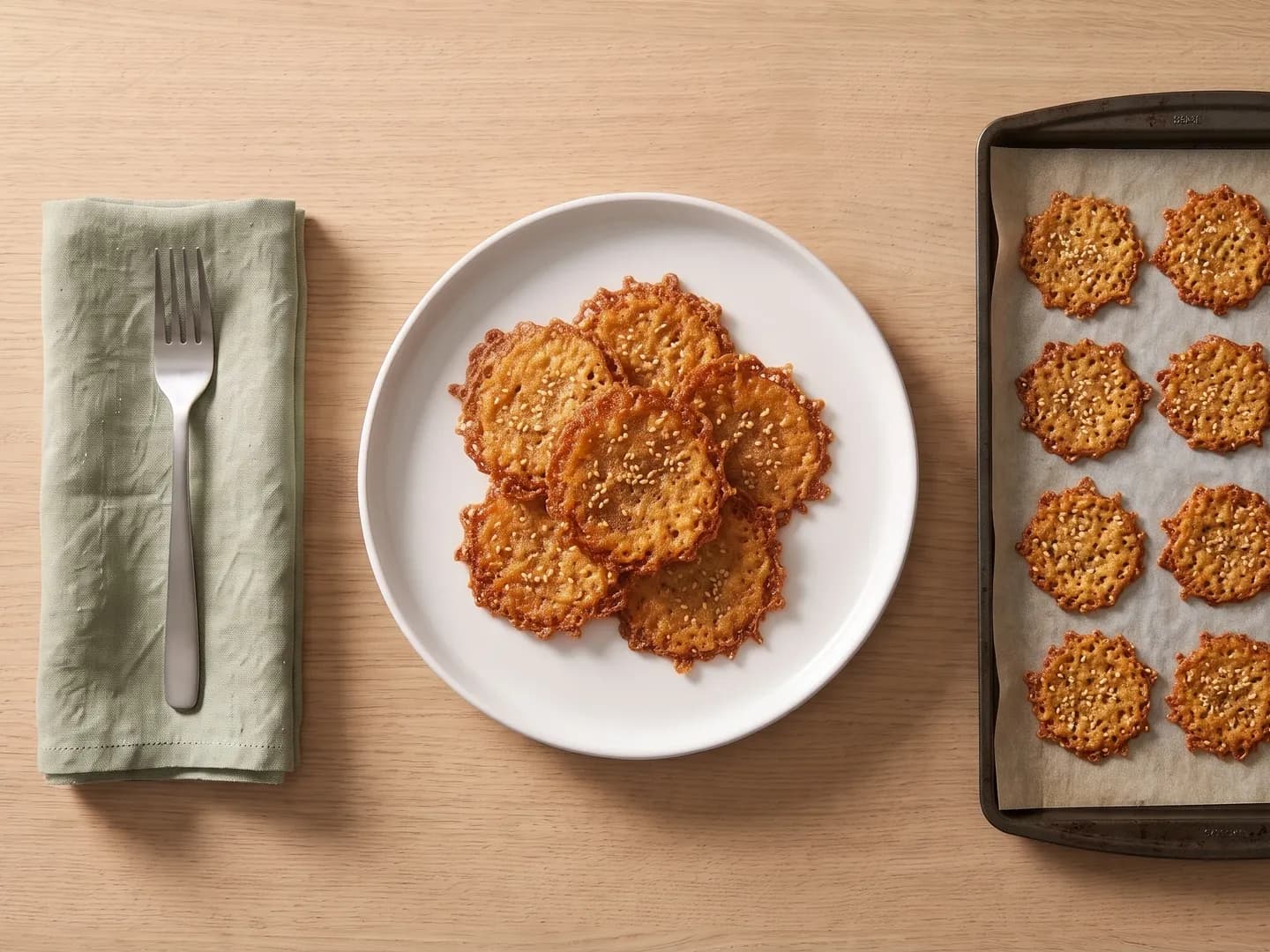
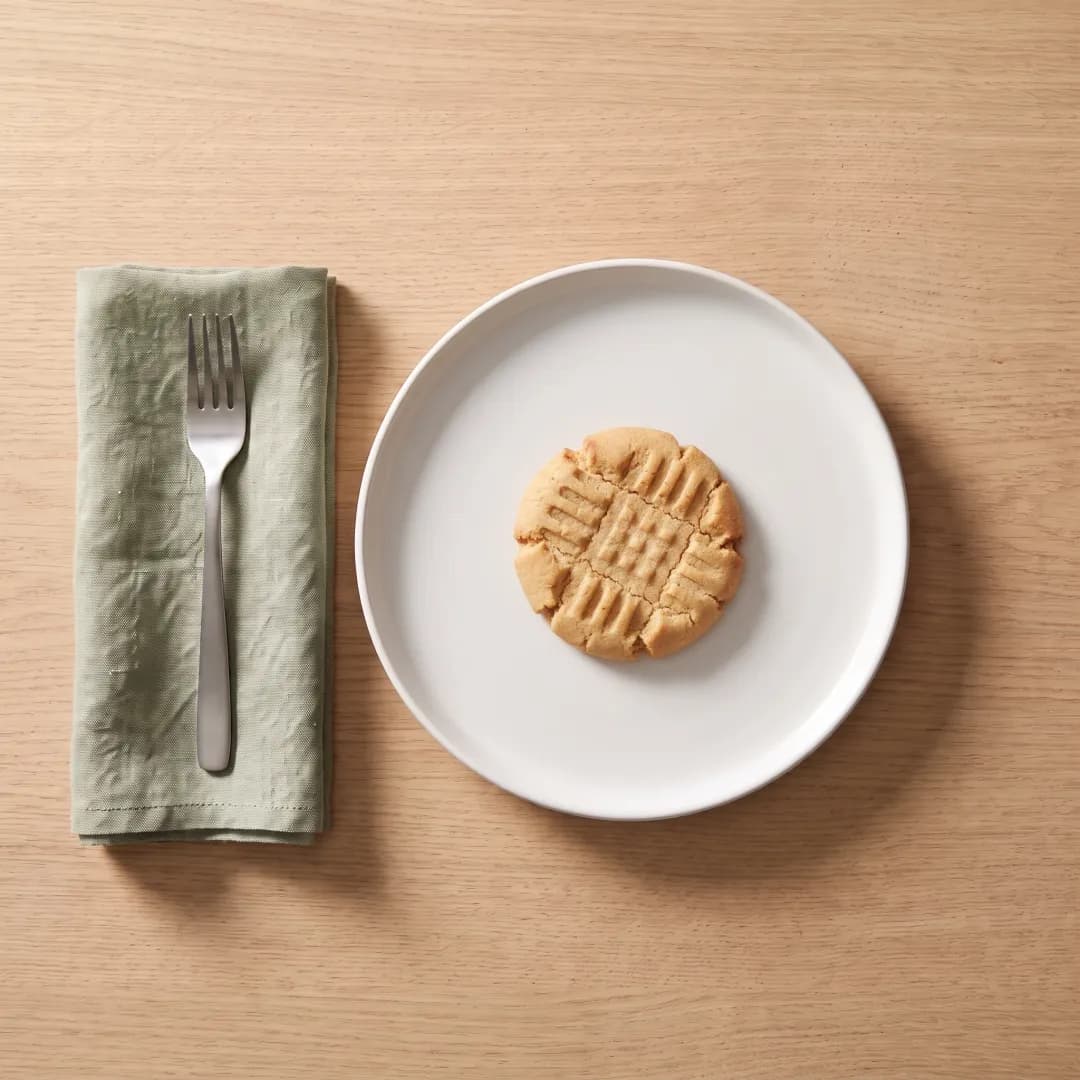
Divide the dough into 12 portions of about 35 g (2 heaping tablespoons) and roll them into 1½-inch (4 cm) balls. Place them 2 inches apart and flatten each with a fork in a crisscross pattern to about ½ inch (1 cm) thick.
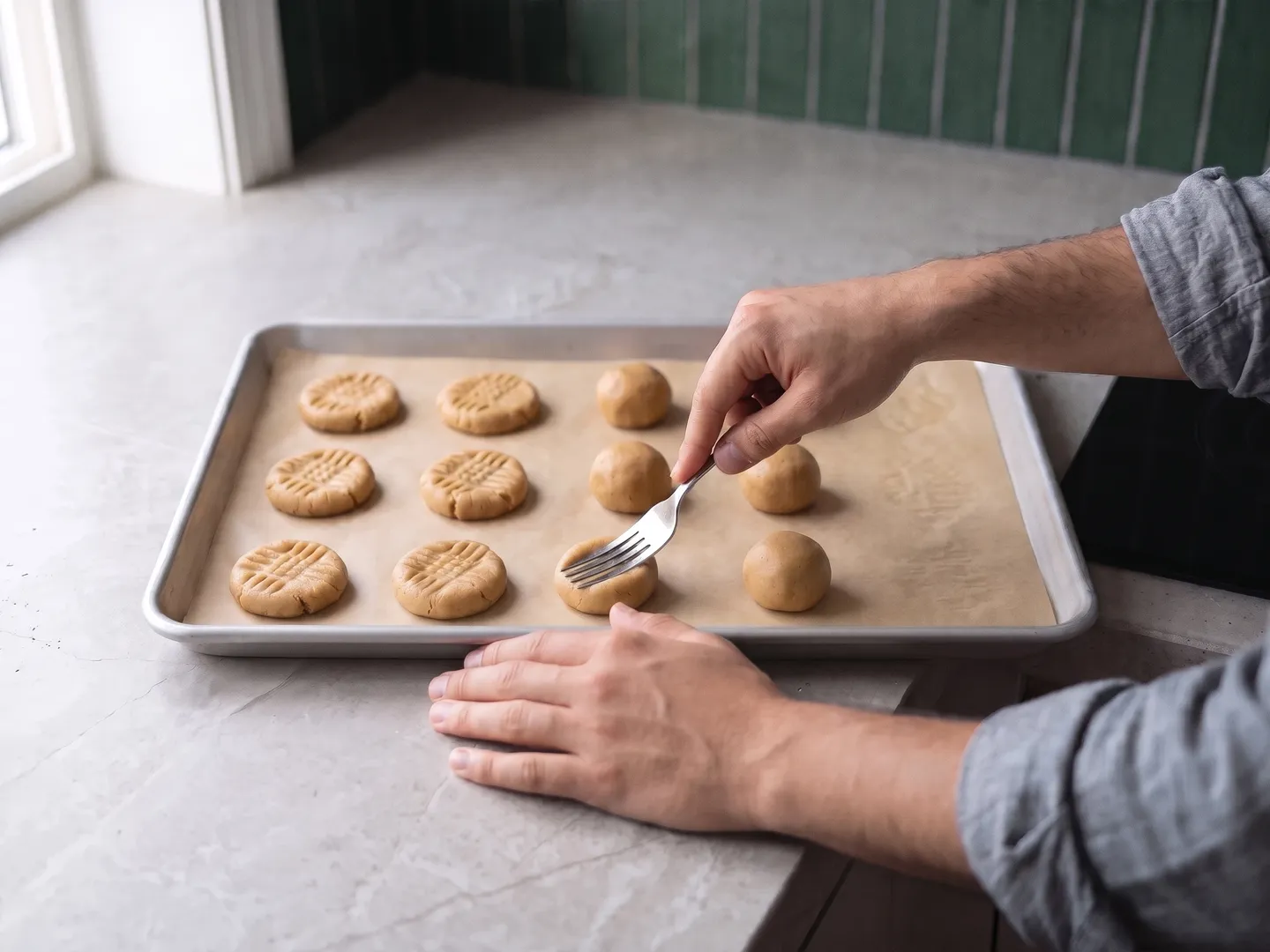
AI-generated illustrative image. Bake until the edges are set and lightly golden and the tops are no longer sticky, about 11 minutes; check at 9 minutes. The centers should still be soft.
Let them cool on the pan for 10 minutes; they are fragile while warm. Then move them to a wire rack to cool completely.
On the plate
A dessert or snack, not part of the plate. One cookie adds about 10 g of carbohydrate, 5 g of it from allulose, and 8 g of protein.
Nutrition
| Nutrient | Per serving (1/12 of recipe) |
|---|---|
| Calories (kcal) | 134 |
| Total carbohydrate | 10 g |
| Dietary fiber | 1 g |
| Total sugars | 2 g |
| Protein | 8 g |
| Total fat | 10 g |
| Saturated fat | 1 g |
| Sodium | 85 mg |
Total carbohydrate includes fiber, as on US nutrition labels. Values are calculated from USDA FoodData Central for the ingredients as listed and are estimates. How we calculate.
Where these numbers come from
| Ingredient | Weight | Carbs | Source |
|---|---|---|---|
| almond flour Almond flour (blanched almonds) | 120 g | 22.4 g | “Nuts, almonds, blanched”, USDA SR Legacy, FDC ID 170568 |
| protein powder Whey protein powder | 60 g | 10.8 g | “Beverages, ABBOTT, EAS whey protein powder”, USDA SR Legacy, FDC ID 173167 |
| peanut butter Peanut butter | 96 g | 21.4 g | “Peanut butter, smooth style, without salt”, USDA SR Legacy, FDC ID 172470 |
| egg Egg, whole, raw | 50 g | <1 g | “Egg, whole, raw, fresh”, USDA SR Legacy, FDC ID 171287 |
| milk Milk, 1% | 30 g | 1.5 g | “Milk, lowfat, fluid, 1% milkfat, with added vitamin A and vitamin D”, USDA SR Legacy, FDC ID 170872 |
| allulose Allulose, granulated | 60 g | 60.0 g | “ALLULOSE SUGAR”, USDA Branded, FDC ID 2652700 |
| baking soda Baking soda | 2 g | 0.0 g | “Leavening agents, baking soda”, USDA SR Legacy, FDC ID 175040 |
| salt Salt | <1 g | 0.0 g | “Salt, table”, USDA SR Legacy, FDC ID 173468 |
| vanilla extract Vanilla extract | 4 g | <1 g | “Vanilla extract”, USDA SR Legacy, FDC ID 173471 |
Counted as zero because the source has no value and the amount is 1 g or less per serving: baking soda (); salt (); vanilla extract ().
Calculation engine v1.3.0.
Swaps and variations
- Almond butter
- Use the same amount of unsalted almond butter instead of the peanut butter.
- Other protein powders
- Use whey. Plant and casein powders absorb more liquid and make a drier, crumbly cookie.
Storage
Keep airtight at room temperature up to 3 days, refrigerated up to 1 week, or frozen up to 3 months.
How we checked this recipe
We haven't cooked this recipe in our kitchen yet. Before publishing it, we compared it with tested recipes of the same kind and checked how its ingredients behave and its safe temperatures.
- The numbers assume 12 cookies of about 35 g. If you make them bigger and get fewer, each has more carbohydrate than listed.
- Use whey protein; other powders make a drier cookie. Brands vary, so weigh it.
- Whey and allulose both brown fast. Take the cookies out when the edges are just golden and the centers are still soft.
- Texture depends on your protein powder and peanut butter.
Tested recipes we compared
- Protein Cookies · Wholesome Yum. Whey, peanut butter and allulose-blend cookies, rated by 50 readers; pulled slightly underbaked
- Peanut Butter Protein Cookies · Well Plated. Rated by more than 200 readers; a slightly sticky whey dough, a splash of milk if dry, not overbaked
- Peanut Butter Protein Cookies · Cookie Madness. Almond flour and whey cookies at 325°F for 9 to 12 minutes, with the whey weighed
How the ingredients behave
- Which Protein Powder Is Best for Baking · Teaspoon of Spice. Whey browns fast, so bake at 325°F in metal pans and pair it with fat such as peanut butter
- Baking Tips for Splenda Allulose Sweeteners · Splenda. Allulose browns faster than sugar; bake 25°F lower
- Troubleshooting Cookies · America's Test Kitchen. Dark sheets overbrown cookie bottoms; use a light sheet with parchment
Food safety
- Raw Flour and Dough · CDC. Don’t taste raw dough made with raw egg
Nutrition values are estimates calculated from USDA data for the ingredients as listed. This recipe is information, not medical advice; decisions about your diet belong to you and your healthcare team. How we calculate.
Printed from diabetesbites.com/recipes/peanut-butter-protein-cookies. Nutrition per serving is calculated from USDA FoodData Central for the ingredients as listed.
FAQs
Quick answers about peanut butter protein cookies.
Can protein cookies be soft?
Yes. Take them out at 9 to 10 minutes, when the tops have just lost their shine; they firm up as they cool.
How many carbohydrates are in a protein cookie?
About 10 g per cookie, 5 g of it from allulose, with 8 g of protein.
Are these protein cookies sugar-free?
No. The peanut butter, egg and protein powder bring about 2 g of sugars per cookie, and allulose is itself a type of sugar that US labels count in total carbohydrate but not in sugars.
How was this recipe?
Be the first to rate it.