Blueberry Protein Muffins
Blueberry protein muffins made with blended oats, Greek yogurt and vanilla whey, sweetened with allulose. About 29 g of carbohydrate and 17 g of protein in a serving of two muffins.
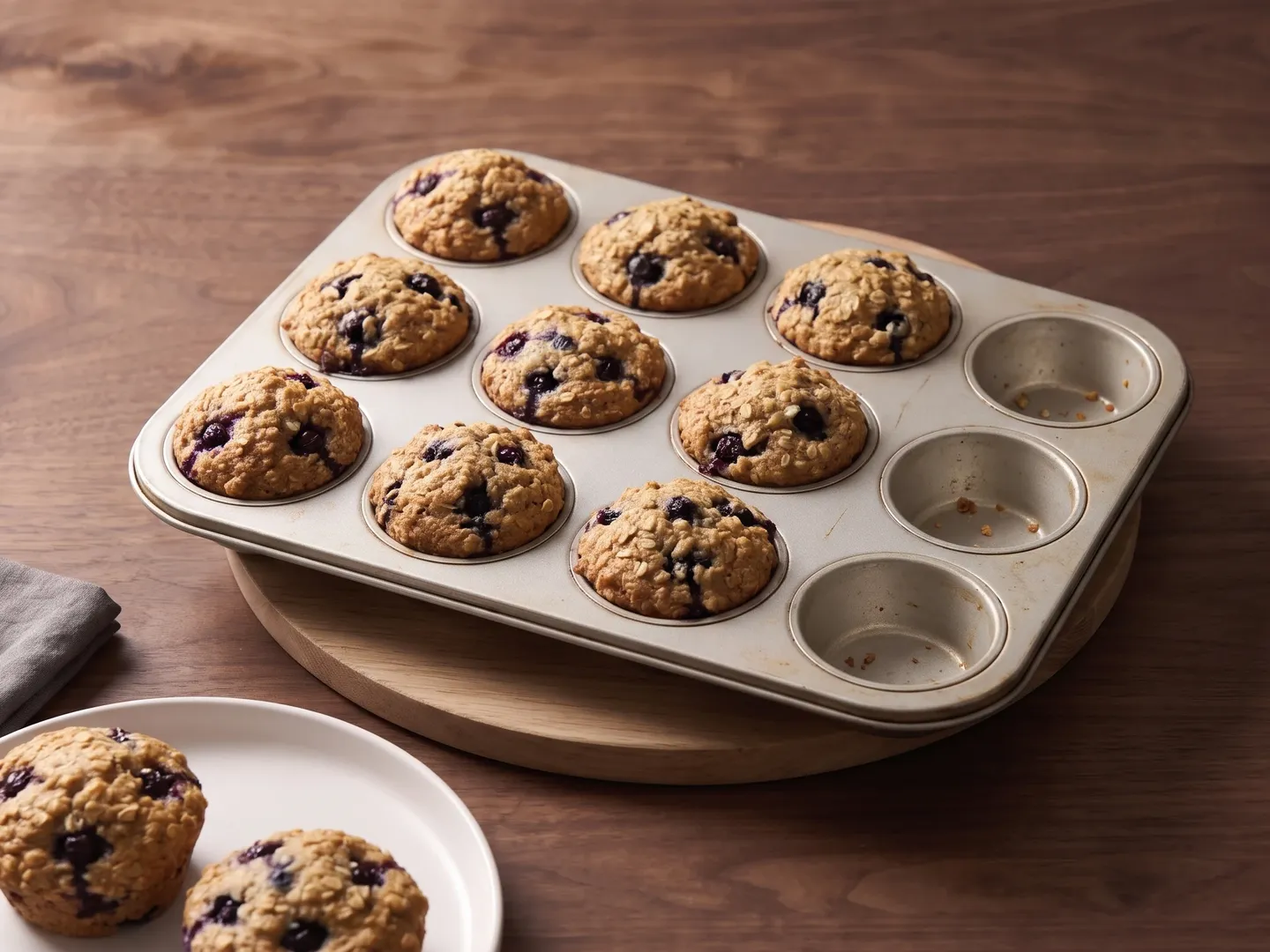
One serving
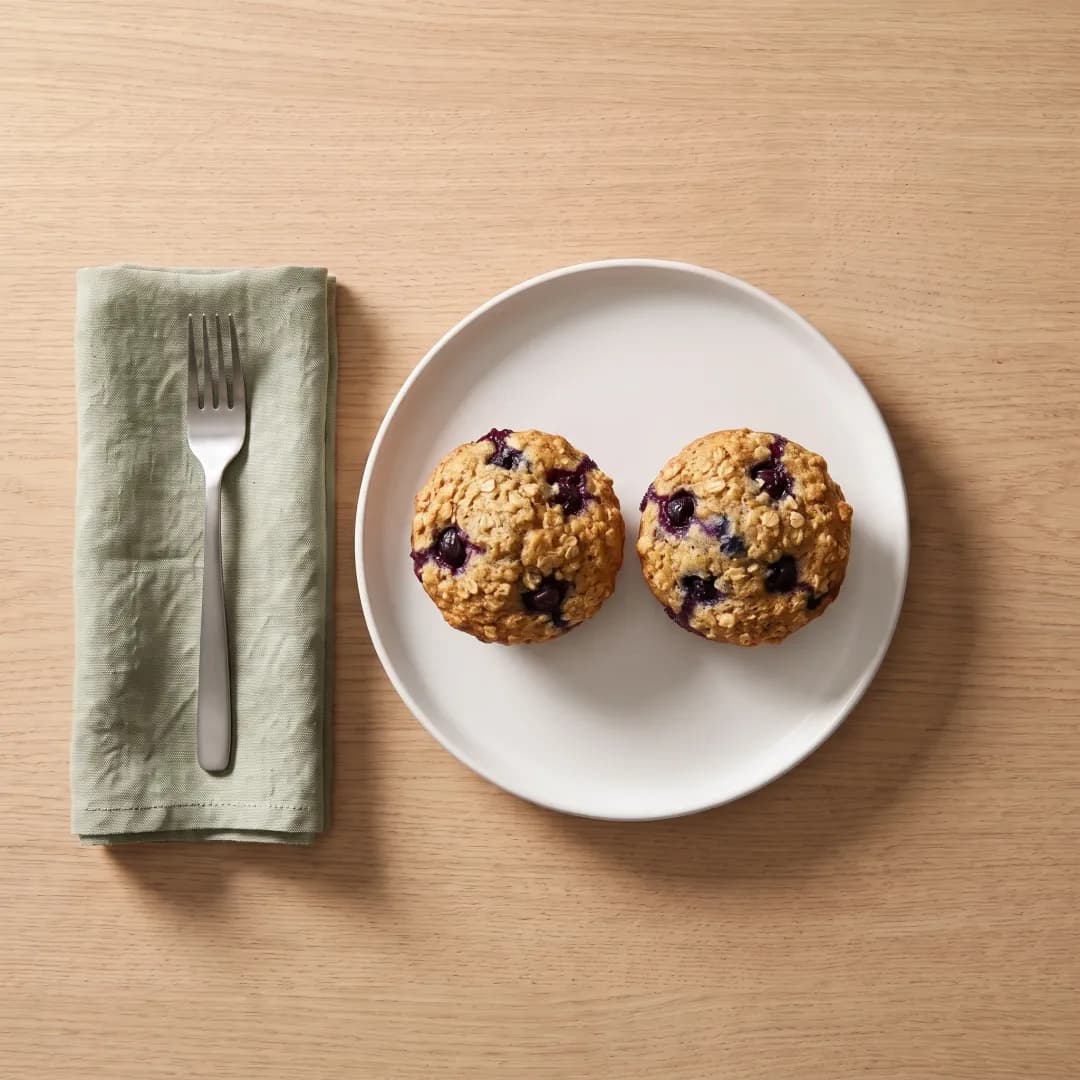
One serving is 2 muffins (makes 12). Prep 15 min · Cook 19 min · Rest or chill 10 min.
Steps
Heat the oven to 350°F (175°C), grease a 12-cup muffin pan and let the oven preheat for 15 minutes.
Blend the rolled oats in a food processor until they look like flour, then pulse in the protein powder, baking powder, baking soda, cinnamon and salt. Set aside 1 tablespoon of the dry mix.
In a large bowl, whisk the Greek yogurt, eggs, milk, olive oil, allulose and vanilla extract, then stir in the dry mix just until no dry flour shows; overmixing makes protein muffins tough.
Toss the blueberries with the reserved tablespoon of dry mix, then gently fold them in.
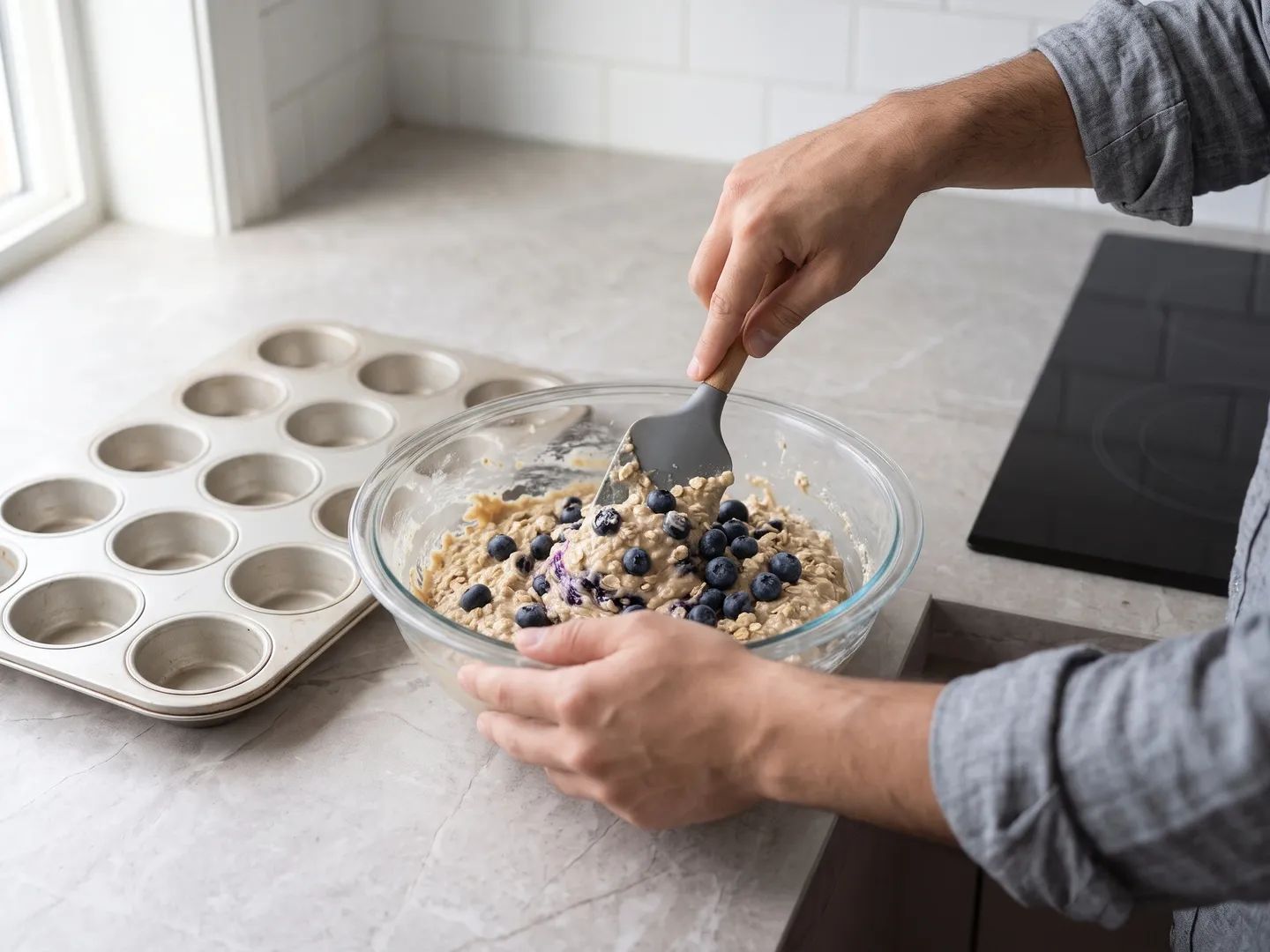
AI-generated illustrative image. Divide the batter among the 12 cups, a heaping ¼ cup (about 68 g) in each. If you have a scale, weigh the batter (about 820 g) and split it evenly. The cups will look less full than usual; that’s right.
Bake until the tops spring back when pressed and a toothpick inserted between berries in the center comes out clean, about 19 minutes; check at 16 minutes. A thermometer in the center should read at least 205°F (96°C). Let them cool in the pan for 10 minutes, then move them to a wire rack.
On the plate
A breakfast: two muffins have about 29 g of carbohydrate, 8 g of it from allulose, and 17 g of protein.
Nutrition
| Nutrient | Per serving (1/6 of recipe) |
|---|---|
| Calories (kcal) | 227 |
| Total carbohydrate | 29 g |
| Dietary fiber | 3 g |
| Total sugars | — |
| Protein | 17 g |
| Total fat | 8 g |
| Saturated fat | 2 g |
| Sodium | 330 mg |
— means at least one ingredient has no published value for that nutrient, so we don't show a total (total sugars).
Total carbohydrate includes fiber, as on US nutrition labels. Values are calculated from USDA FoodData Central for the ingredients as listed and are estimates. How we calculate.
Where these numbers come from
| Ingredient | Weight | Carbs | Source |
|---|---|---|---|
| rolled oats Oats, rolled, dry | 120 g | 79.6 g | “Oats (Includes foods for USDA's Food Distribution Program)”, USDA SR Legacy, FDC ID 169705 |
| protein powder Whey protein powder | 60 g | 10.8 g | “Beverages, ABBOTT, EAS whey protein powder”, USDA SR Legacy, FDC ID 173167 |
| baking powder Baking powder, double-acting | 8 g | 2.2 g | “Leavening agents, baking powder, double-acting, sodium aluminum sulfate”, USDA SR Legacy, FDC ID 172803 |
| baking soda Baking soda | 2 g | 0.0 g | “Leavening agents, baking soda”, USDA SR Legacy, FDC ID 175040 |
| cinnamon Cinnamon, ground | 2 g | 1.6 g | “Spices, cinnamon, ground”, USDA SR Legacy, FDC ID 171320 |
| salt Salt | <1 g | 0.0 g | “Salt, table”, USDA SR Legacy, FDC ID 173468 |
| Greek yogurt Greek yogurt, plain, nonfat | 240 g | 8.6 g | “Yogurt, Greek, plain, nonfat (Includes foods for USDA's Food Distribution Program)”, USDA SR Legacy, FDC ID 170894 |
| eggs Egg, whole, raw | 100 g | <1 g | “Egg, whole, raw, fresh”, USDA SR Legacy, FDC ID 171287 |
| milk Milk, 1% | 60 g | 3.0 g | “Milk, lowfat, fluid, 1% milkfat, with added vitamin A and vitamin D”, USDA SR Legacy, FDC ID 170872 |
| olive oil Olive oil | 28 g | 0.0 g | “Oil, olive, salad or cooking”, USDA SR Legacy, FDC ID 171413 |
| allulose Allulose, granulated | 48 g | 48.0 g | “ALLULOSE SUGAR”, USDA Branded, FDC ID 2652700 |
| vanilla extract Vanilla extract | 4 g | <1 g | “Vanilla extract”, USDA SR Legacy, FDC ID 173471 |
| blueberries Blueberries | 150 g | 21.8 g | “Blueberries, raw”, USDA SR Legacy, FDC ID 171711 |
Counted as zero because the source has no value and the amount is 1 g or less per serving: baking soda (); cinnamon (); salt (); vanilla extract ().
Calculation engine v1.3.0.
Swaps and variations
- One muffin as a snack
- A single muffin has about 15 g of carbohydrate and 8 g of protein.
- Other protein powders
- Use whey. Plant protein absorbs more liquid and bakes drier.
Storage
Refrigerate up to 4 days or freeze up to 3 months; warm 20 seconds in the microwave.
How we checked this recipe
We haven't cooked this recipe in our kitchen yet. Before publishing it, we compared it with tested recipes of the same kind and checked how its ingredients behave and its safe temperatures.
- The numbers assume 12 muffins of about 68 g (a heaping ¼ cup). If you get fewer, each has more carbohydrate than listed.
- Whey protein dries out if overbaked. Start checking at 16 minutes.
- Rise and texture depend on your protein powder. Expect a springy, moist muffin rather than a tender bakery crumb.
Tested recipes we compared
- Blueberry Protein Muffins · Eating Bird Food. Oat flour, protein powder and Greek yogurt muffins, rated by 45 readers; berries tossed in flour; 18 to 20 minutes
- Healthy Blueberry Protein Muffins · Haute & Healthy Living. Blended oats, protein and Greek yogurt at 350°F for 20 to 22 minutes, 12 muffins
- Healthy Blueberry Protein Muffins · The Clean Eating Couple. Oat flour and whey at 350°F for 16 to 20 minutes; whey bakes better than plant powder
How the ingredients behave
- 5 Tips for Baking with Whey Protein Powder · Vitacost. Keep whey to about a third of the flour, add extra moisture and don’t overmix
- Knowing When Cakes, Muffins, and Quick Breads Are Done · America's Test Kitchen. A springy center and a skewer that comes out fairly clean
- How to Tell When Banana Bread Is Done · King Arthur Baking. Gluten-free quick breads are done at 205 to 210°F; a toothpick can mislead with fruit
Food safety
- Shell Eggs from Farm to Table · USDA FSIS. Baked egg dishes and refrigerated storage of 3 to 4 days
Nutrition values are estimates calculated from USDA data for the ingredients as listed. This recipe is information, not medical advice; decisions about your diet belong to you and your healthcare team. How we calculate.
Printed from diabetesbites.com/recipes/blueberry-protein-muffins. Nutrition per serving is calculated from USDA FoodData Central for the ingredients as listed.
FAQs
Quick answers about blueberry protein muffins.
How do you make protein muffins moist?
Greek yogurt and a little oil keep them tender. Mix just until combined and take them out as soon as the tops spring back; whey dries out if overbaked.
Can I use frozen blueberries?
Yes, straight from the freezer. Toss them in the reserved tablespoon of dry mix so they don’t sink, and bake 2 minutes longer.
How was this recipe?
Be the first to rate it.