Dense Bean Salad
A no-cook dense bean salad with chickpeas, white beans and edamame, crunchy cucumber and red pepper, feta and a lemon-oregano vinaigrette. About 35 g of carbohydrate and 10 g of fiber per serving.
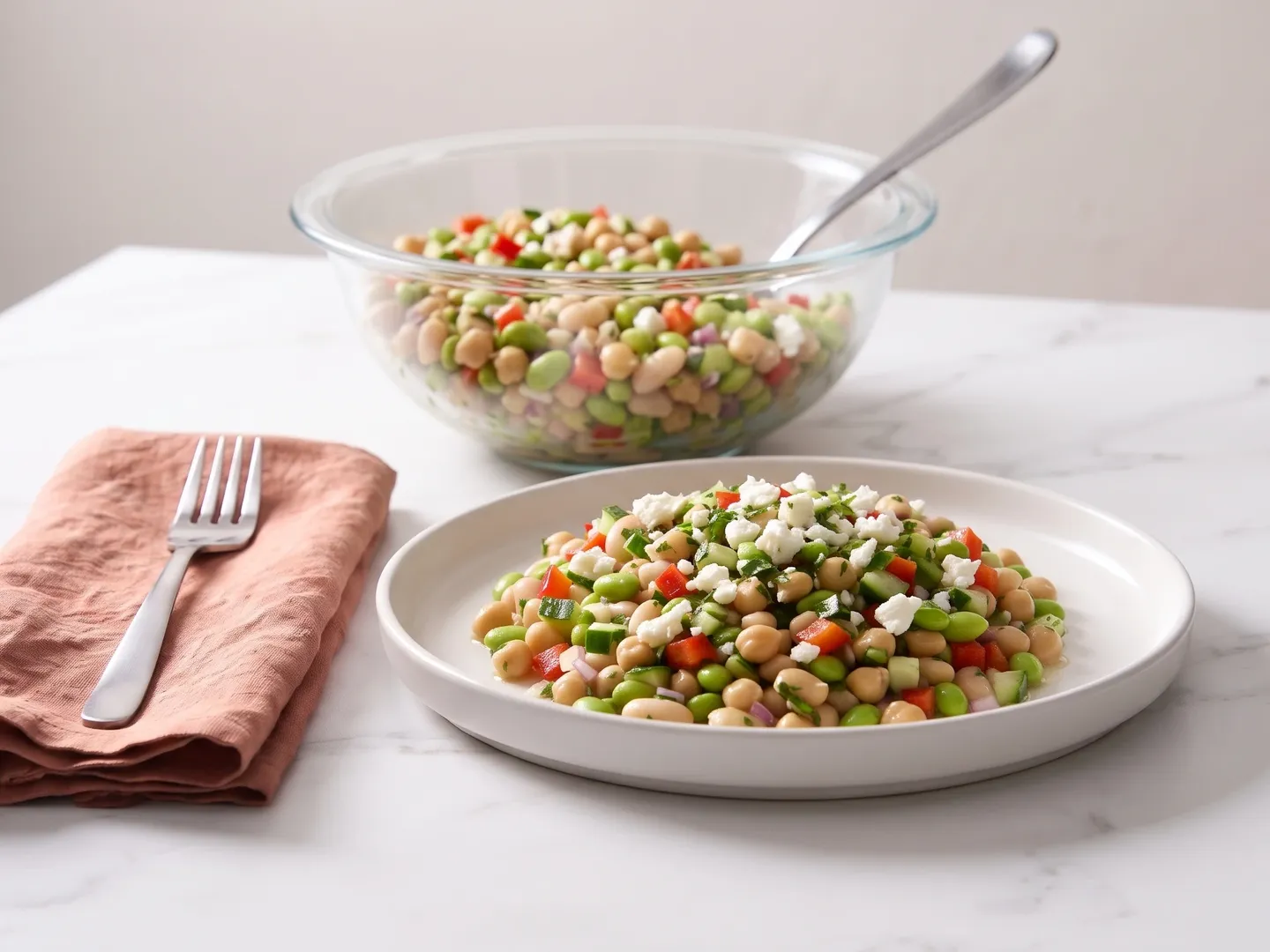
One serving
One serving is about 1¾ cups. Prep 15 min · Cook 0 min · Rest or chill 15 min.
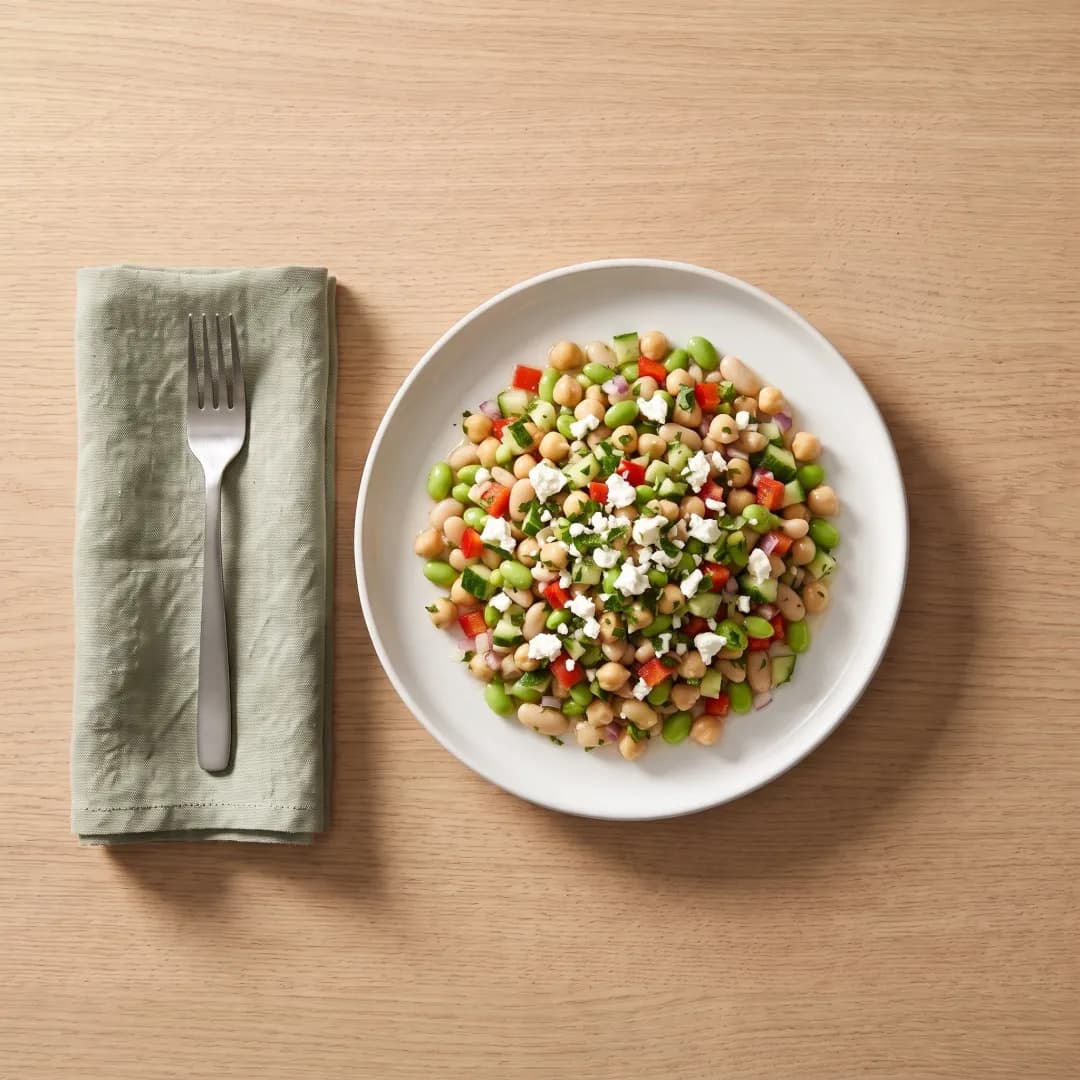
Steps
Whisk the olive oil, vinegar, lemon juice, oregano, salt and black pepper in a large glass bowl.
Add the chickpeas, white beans, edamame, cucumber, red bell pepper and red onion and toss well.
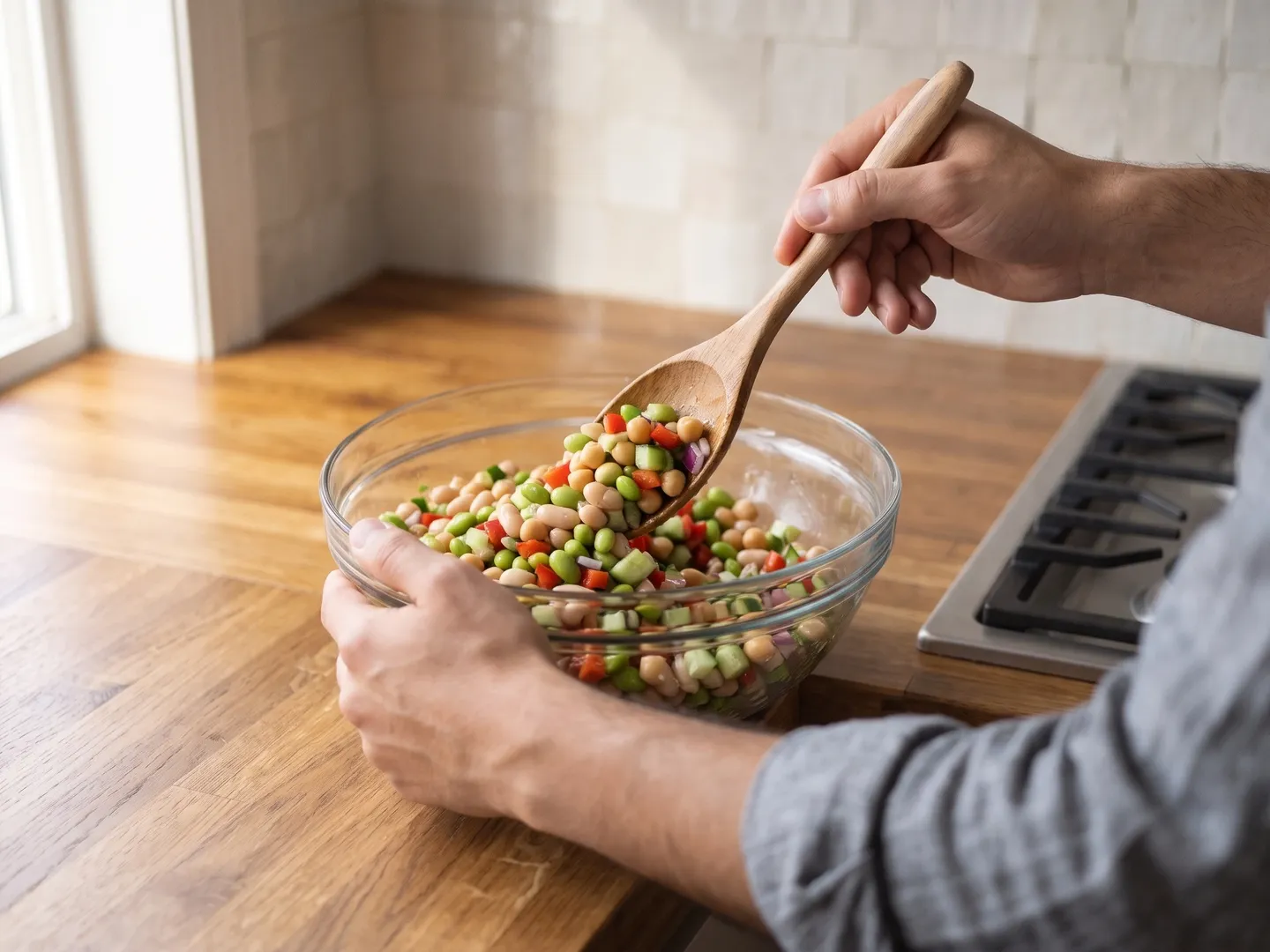
AI-generated illustrative image. Fold in the feta and parsley.
Refrigerate for 15 minutes so the beans soak up the dressing.
On the plate
A complete lunch in one bowl: beans and edamame bring the protein and the carbohydrate, the vegetables fill out the rest. About 35 g of carbohydrate per serving; bread or pita on the side adds more.
Nutrition
| Nutrient | Per serving (1/4 of recipe) |
|---|---|
| Calories (kcal) | 306 |
| Total carbohydrate | 35 g |
| Dietary fiber | 10 g |
| Total sugars | 7 g |
| Protein | 17 g |
| Total fat | 12 g |
| Saturated fat | 3 g |
| Sodium | 480 mg |
Total carbohydrate includes fiber, as on US nutrition labels. Values are calculated from USDA FoodData Central for the ingredients as listed and are estimates. How we calculate.
Where these numbers come from
| Ingredient | Weight | Carbs | Source |
|---|---|---|---|
| chickpeas Chickpeas, canned, drained and rinsed | 240 g | 55.0 g | “Chickpeas (garbanzo beans, bengal gram), mature seeds, canned, drained, rinsed in tap water”, USDA SR Legacy, FDC ID 173801 |
| white beans Great northern beans, canned, low sodium | 200 g | 42.0 g | “Beans, great northern, mature seeds, canned, low sodium”, USDA SR Legacy, FDC ID 173791 |
| edamame Edamame, cooked | 200 g | 17.8 g | “Edamame, frozen, prepared”, USDA SR Legacy, FDC ID 168411 |
| cucumber Cucumber, with peel | 200 g | 7.3 g | “Cucumber, with peel, raw”, USDA SR Legacy, FDC ID 168409 |
| red bell pepper Bell pepper, red, raw | 120 g | 7.2 g | “Peppers, sweet, red, raw”, USDA SR Legacy, FDC ID 170108 |
| red onion Onion, raw | 40 g | 3.7 g | “Onions, raw”, USDA SR Legacy, FDC ID 170000 |
| feta Feta cheese | 56 g | 2.2 g | “Cheese, feta”, USDA SR Legacy, FDC ID 173420 |
| parsley Parsley, fresh | 15 g | <1 g | “Parsley, fresh”, USDA SR Legacy, FDC ID 170416 |
| olive oil Olive oil | 20 g | 0.0 g | “Oil, olive, salad or cooking”, USDA SR Legacy, FDC ID 171413 |
| vinegar Cider vinegar | 30 g | <1 g | “Vinegar, cider”, USDA SR Legacy, FDC ID 173469 |
| lemon juice Lemon juice | 15 g | 1.0 g | “Lemon juice, raw”, USDA SR Legacy, FDC ID 167747 |
| oregano Oregano, dried | 1 g | <1 g | “Spices, oregano, dried”, USDA SR Legacy, FDC ID 171328 |
| salt Salt | 1 g | 0.0 g | “Salt, table”, USDA SR Legacy, FDC ID 173468 |
| black pepper Black pepper, ground | <1 g | <1 g | “Spices, pepper, black”, USDA SR Legacy, FDC ID 170931 |
Counted as zero because the source has no value and the amount is 1 g or less per serving: oregano (); salt (); black pepper ().
Calculation engine v1.3.0.
Swaps and variations
- Dairy-free
- Leave out the feta and add ½ cup diced avocado just before serving.
- Other beans
- Use rinsed low-sodium kidney or cannellini beans instead of the white beans.
Storage
Refrigerate within 2 hours in a closed container, up to 4 days. Stir before serving.
Nutrition values are estimates calculated from USDA data for the ingredients as listed. This recipe is information, not medical advice; decisions about your diet belong to you and your healthcare team. How we calculate.
Printed from diabetesbites.com/recipes/dense-bean-salad. Nutrition per serving is calculated from USDA FoodData Central for the ingredients as listed.
FAQs
Quick answers about dense bean salad.
What is a dense bean salad?
A salad built mostly on beans instead of lettuce, so it’s filling and keeps for days. This one has 10 g of fiber and 17 g of protein per serving.
How many carbohydrates are in a dense bean salad?
About 35 g per serving, with 10 g of fiber. Most of it comes from the chickpeas and white beans, so the salad counts as a carbohydrate food as well as a protein.
How was this recipe?
Be the first to rate it.